| In March 14–21, 2025, three planners from the Community Planning and Revitalization division of the Baltimore City Department of Planning joined students from Morgan State University’s School of Architecture and Planning on an eye-opening study abroad journey through Amsterdam, Rotterdam, Antwerp, and Delft—an immersive educational experience led by Professor Cristina Murphy. The week-long trip provided the opportunity to witness firsthand how European cities are tackling pressing urban challenges through sustainable design, participatory planning, and community-centered innovation. The DOP planners (Tarek Bolden, Kari Nye, and Imani Jasper) provided their perspectives and experience in community-centered development on this trip. The planners participated in many of the activities in the student trip (described on another webpage), plus had some additional activities for them (described below). This trip was part of a 2-way Baltimore-Rotterdam exchange in 2025. |
March 19: City Planning Presentations in Rotterdam
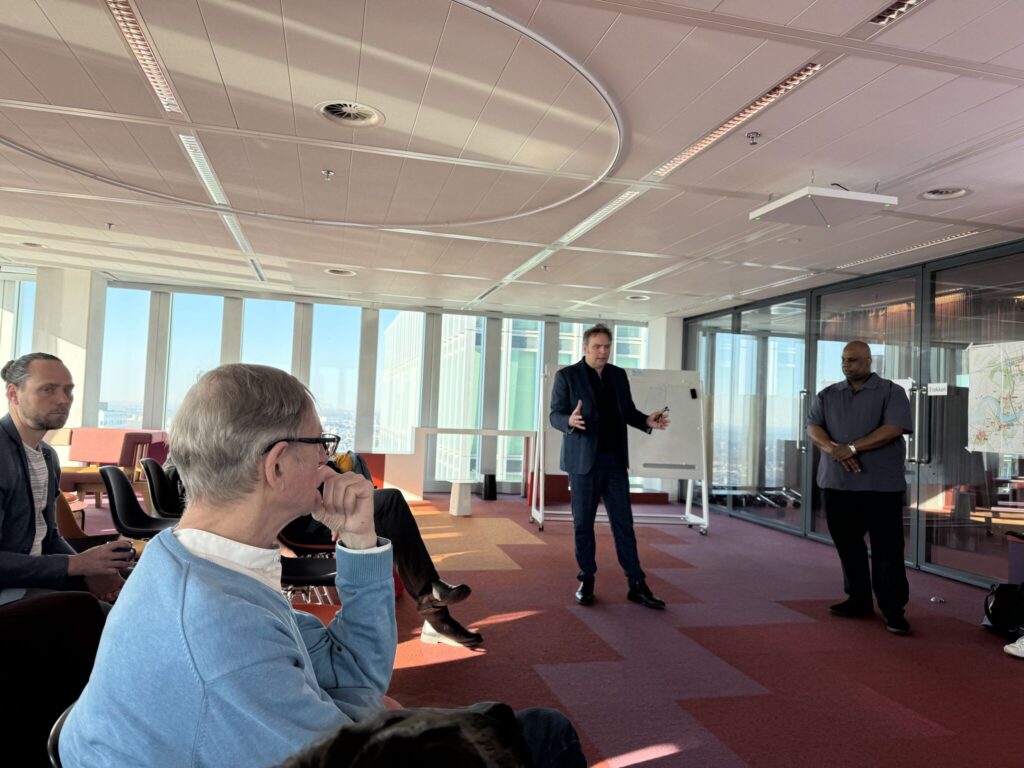
Hermen Borst, Director of Urban Development at the Municipality of Rotterdam provided introductory remarks.
(Photo: CCM)
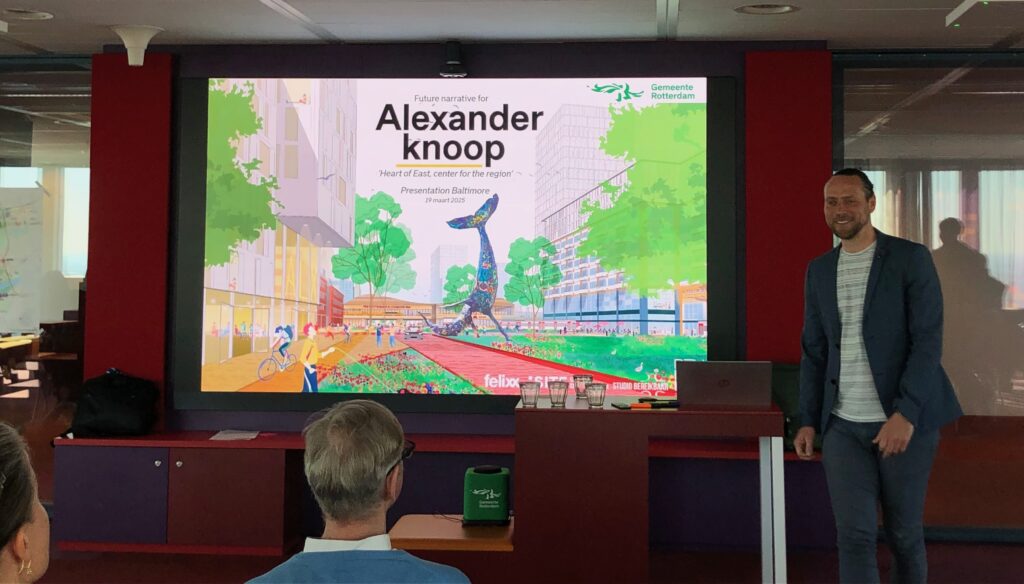
Before the presentations, Hermen Borst, Director of Urban Development at the Municipality of Rotterdam, provided an introduction and talked about the need in Rotterdam for more engagement with the community in city planning, and more focus on placemaking. Then, Baltimore Department of Planning presented to Baltimore students and faculty, Rotterdam city planners, the leader of Architecture Institute Rotterdam (AIR), Baltimore-Rotterdam Sister Cities Committee members and other design professionals. After the Baltimore session, Rotterdam city planners provided presentations.
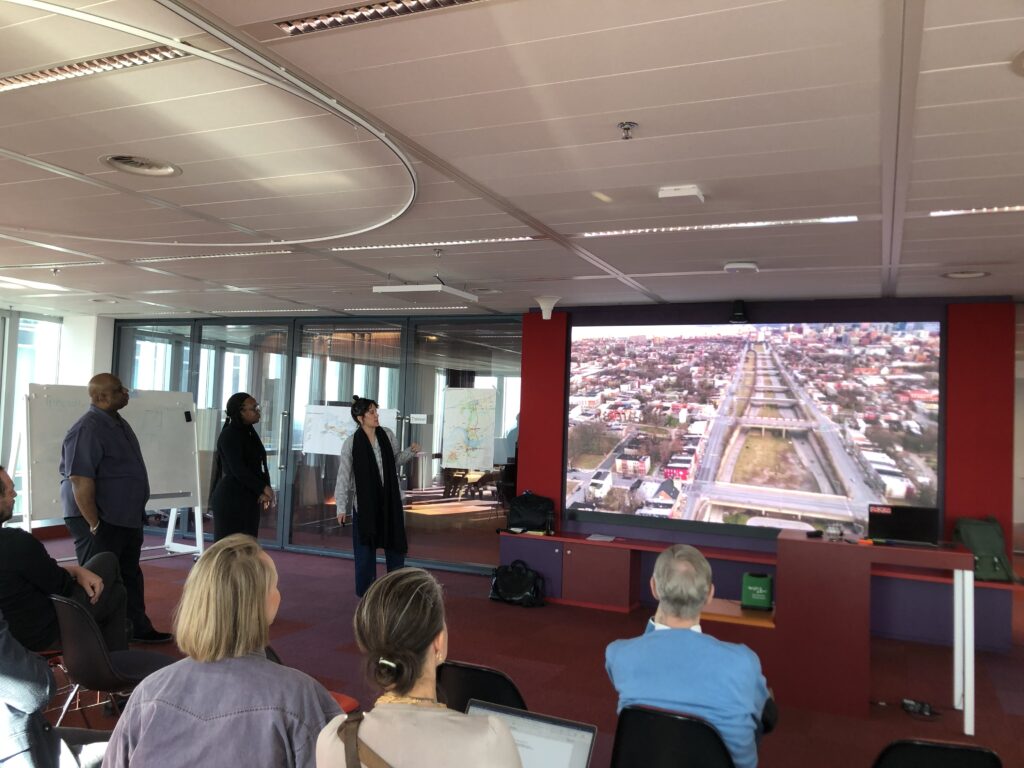
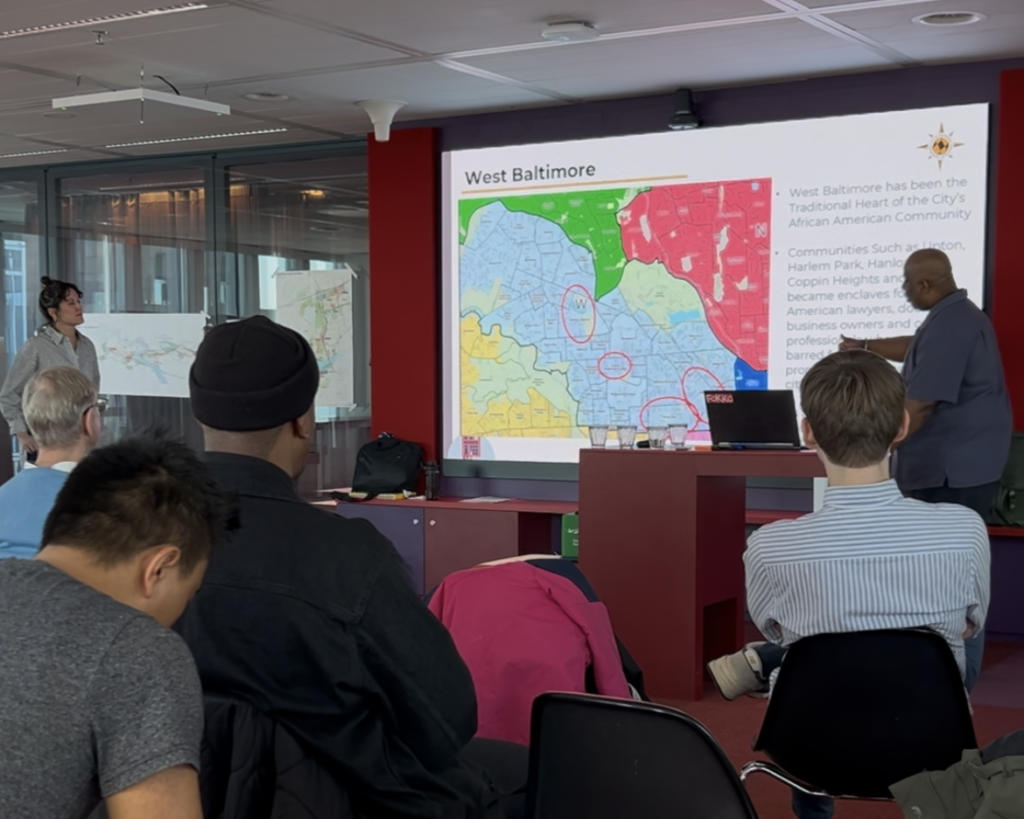
Tarek Bolden, Kari Nye, and Imani Jasper, the community planners from Baltimore, provided presentations about how the Department of Planning operates; the history of urban development in Baltimore, including the negative impacts from decades of discriminatory policies, aging infrastructure, vacant buildings, and climate change; and the areas of the city that each planner is focused on: Northwest (including Park Heights); East (including Johnston Square); West (including the Highway to Nowhere). The planners are based in these areas of the Baltimore and work with the community. The planners talked about strategies that they and the community residents and nonprofits are currently taking, to rebuild trust and to work on addressing the negative impacts of historical disinvestment in those neighborhoods and move towards a future where residents can thrive.
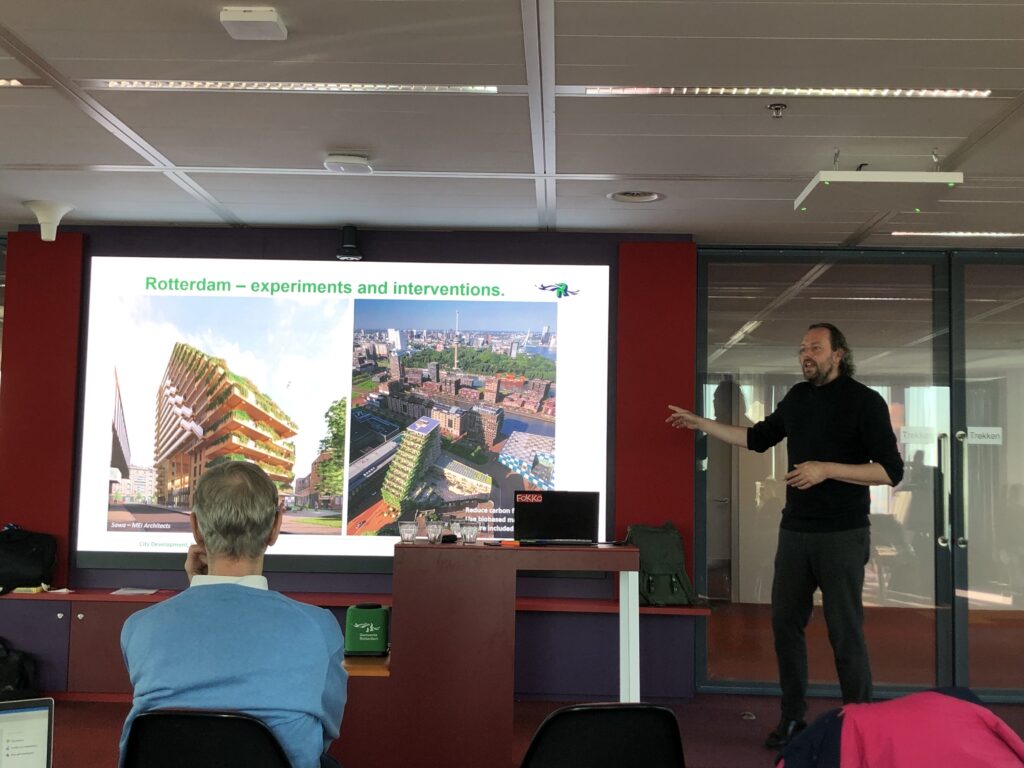
Emiel Arends presentation
(Photo: Sengers)
Emiel Arends, Senior Advisor on Urban Affairs for the city of Rotterdam, gave a presentation about how city planning works in Rotterdam; the history of urban development; and more recent developments — e.g. making city less car-centric; tryouts of new types of buildings like the Boijmans Depot and the SAWA wooden building; the pressing need to address an acute housing shortage and to accommodate the increase in single-person households; a new city policy to encourage and facilitate placemaking; and the city’s vision to create a polycentric city. He also talked about the impact of climate change and the city’s strategies to mitigate the impact.
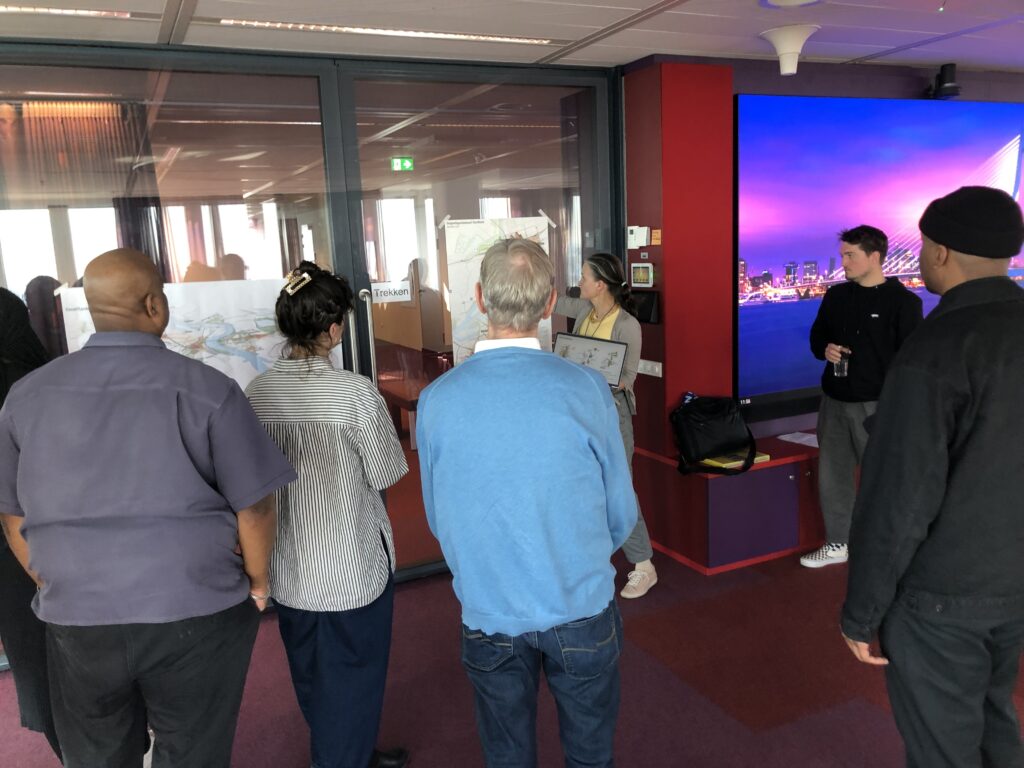
Marlies van der Maarel, urban planner for Rotterdam, showed a map to the group, and talked about the planning for redevelopment in the Oostflank (East Wing) of Rotterdam — she provided the broader context for the next presentation from Danny Nelemans.
Danny Nelemans, urban planner focusing on east Rotterdam, gave a presentation about Prins Alexander, a neighborhood in Rotterdam’s East Wing that was built as a modernist garden city starting the 1960’s and in the decades that followed, with functional separation between living, working, traffic, and recreation areas. There are separate all-asphalt sections that were focused on warehouses, offices , shopping malls, and rails, where no one lived — but now the area needs rethinking to make it more integrated and connected and more livable, add more green, make it pedestrian friendly, increase housing, add cultural amenities and placemaking, and improve the public transportation. The city has started planning the changes. Danny talked about the approaches that have been taken to involve the community in envisioning the future improvements.
March 19: Prins Alexander neighborhood in Rotterdam
After the presentations at Rotterdam city government, Danny Nelemans and Emiel Arends took the Baltimore city planners on a walking tour of Prins Alexander, starting with the Lage Land neighborhood. Mike van Staten, community urbanist in Rotterdam, and Ferdinand Jan van der Pijl, a retired Rotterdam architect, also joined the tour, along with Rachel Sengers, chair of the Baltimore-Rotterdam Sister City Committee and Wouter Portegijs, Professor Cristina Murphy’s spouse.
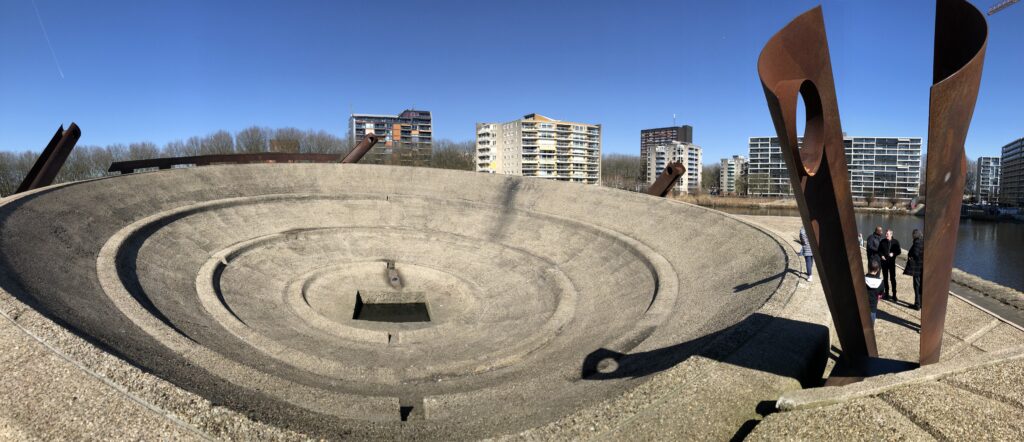
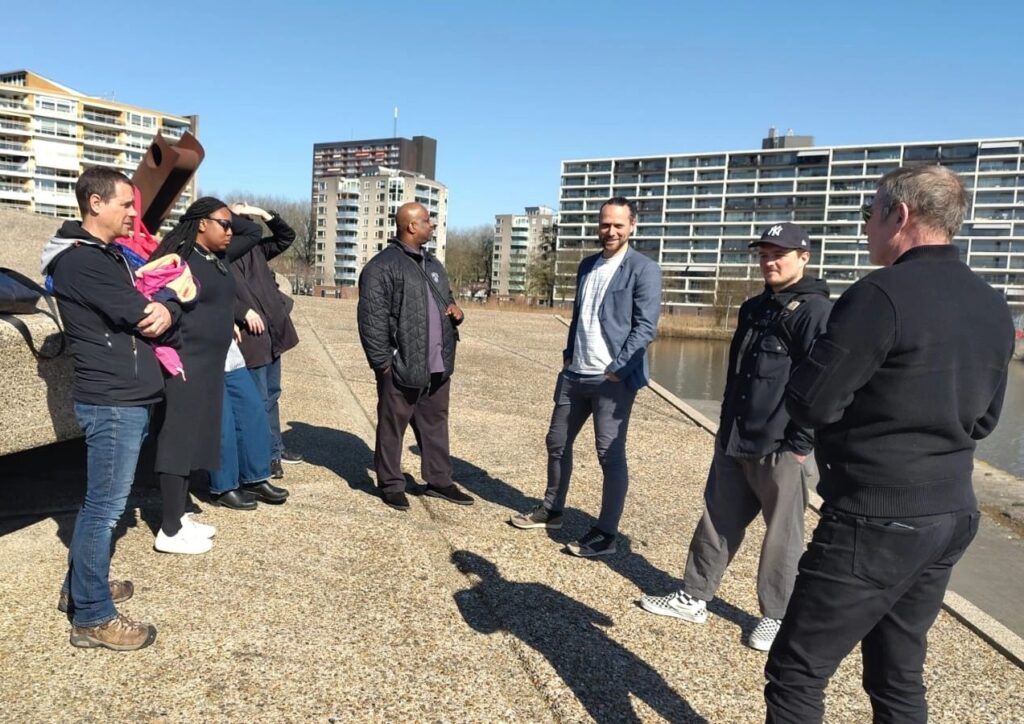
Herman van Dongen (on the right), joined the tour at Lage Land. (Photo: Emiel Arends)
Herman is a community builder in Prins Alexander and serves as a connector between the city planners and the local community. He is Project Manager for a nonprofit called Stichting Hart voor Prins Alexander, an initiative of local residents and entrepreneurs. He shared with our group his insights on what it is like for people to live here and the types of development that would benefit this area of Rotterdam.
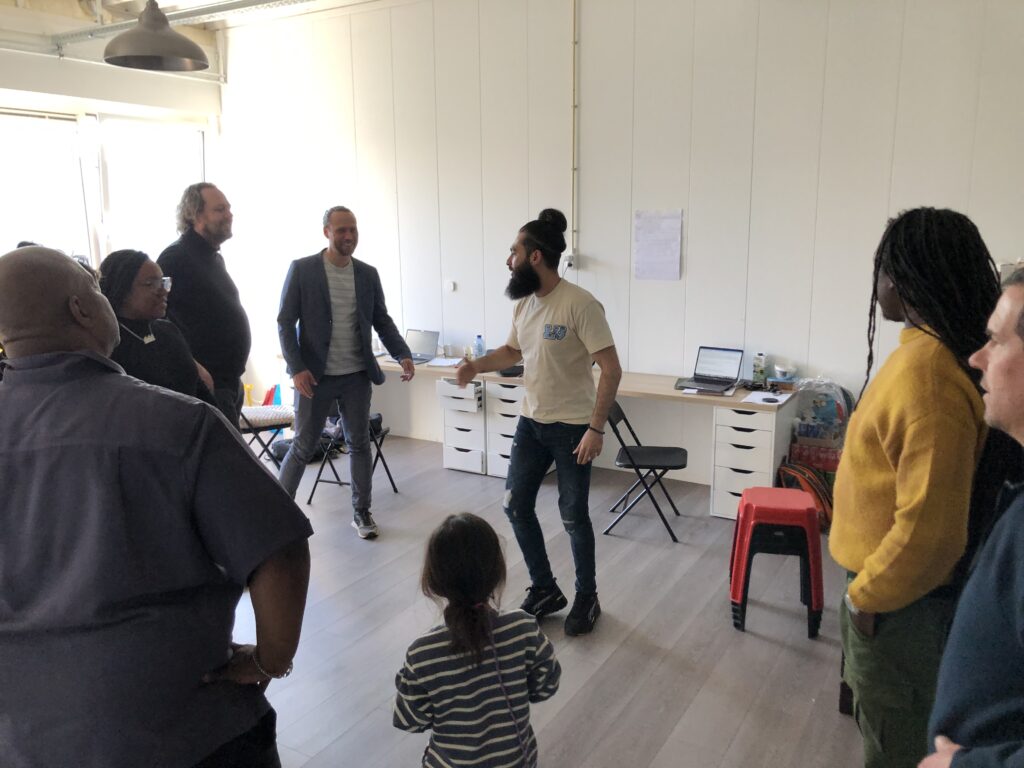
The group met Sharif Abdoelhak (center) and Bjorn “Be” Romy (right), the leaders of Stichting CPO.
(Photo: Sengers)
The city has provided space to Stichting CPO (Stichting Culturele Persoonlijke Ontwikkeling) and other creatives in a vacant industrial building, to help revitalize the neighborhood and bring more culture to the area. Stichting CPO does social cultural community building in Prins Alexander. Stichting CPO mentors and teaches youth, to give them skills in storytelling, videography, and performance, and to build their self-awareness and help put them on a path towards success and fulfillment in their life.
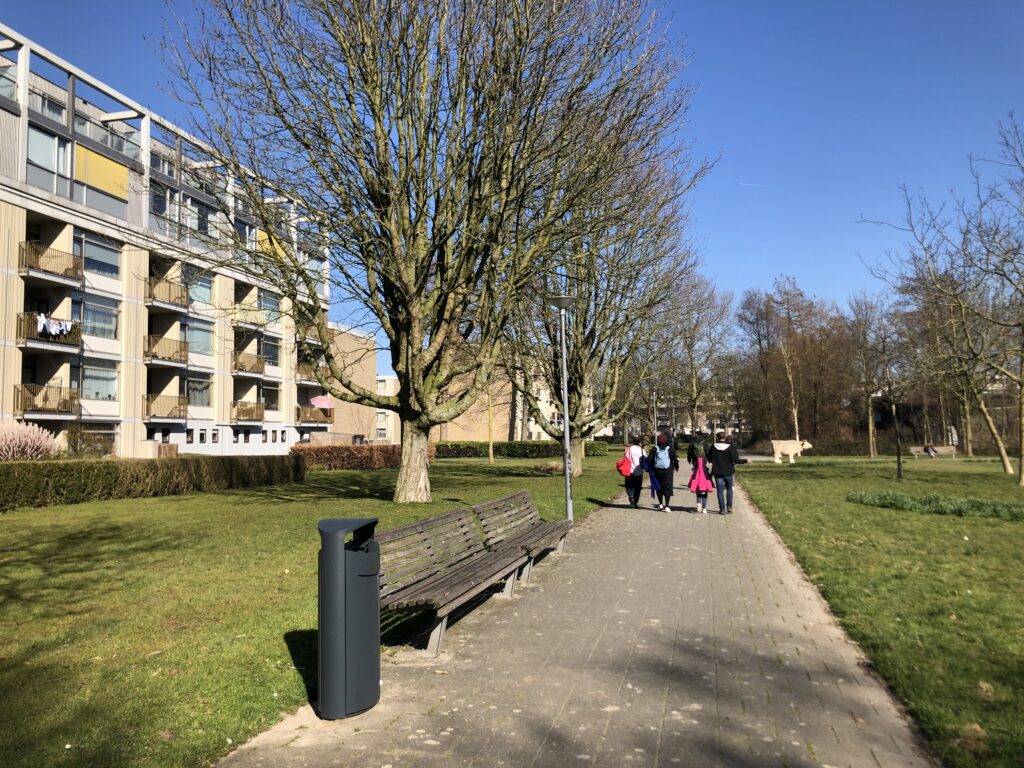
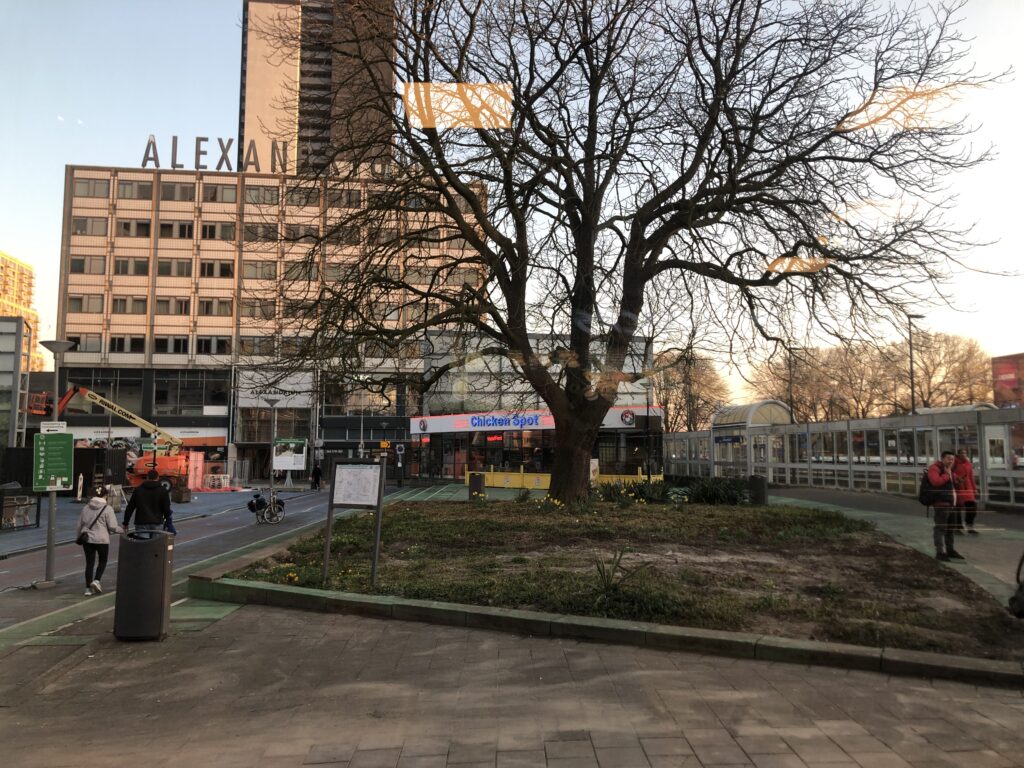
The walking tour continued through residential and commercial districts and then to Alexanderknoop, the central transit hub area, where Michelle Mandos (Strategic Advisor for Culture for the city of Rotterdam) joined the group for a discussion.
March 20: Nieuwe Instituut
On the following day, Marie-Anne Souloumiac, Programme Manager of Agency, gave a tour of the Nieuwe Instituut (New Institute), Rotterdam’s museum for architecture, design, and digital culture. Their ‘Agency’ facilitates collaborations around the world, including collaborations about community planning with Chicago and the Bronx in the U.S.
March 21: Amsterdam Zuidoost
The next day was spent in Amsterdam, starting in the Zuidoost (southeast) district. This area was built in the 1960’s with functional separation between living, working, traffic, and recreation areas. Most of the housing was in the form of monotone, impersonal highrise tower blocks. In the 1970’s many people from Suriname, a former colony of the Netherlands, settled here. The area has undergone several large-scale urban renewal projects since then.
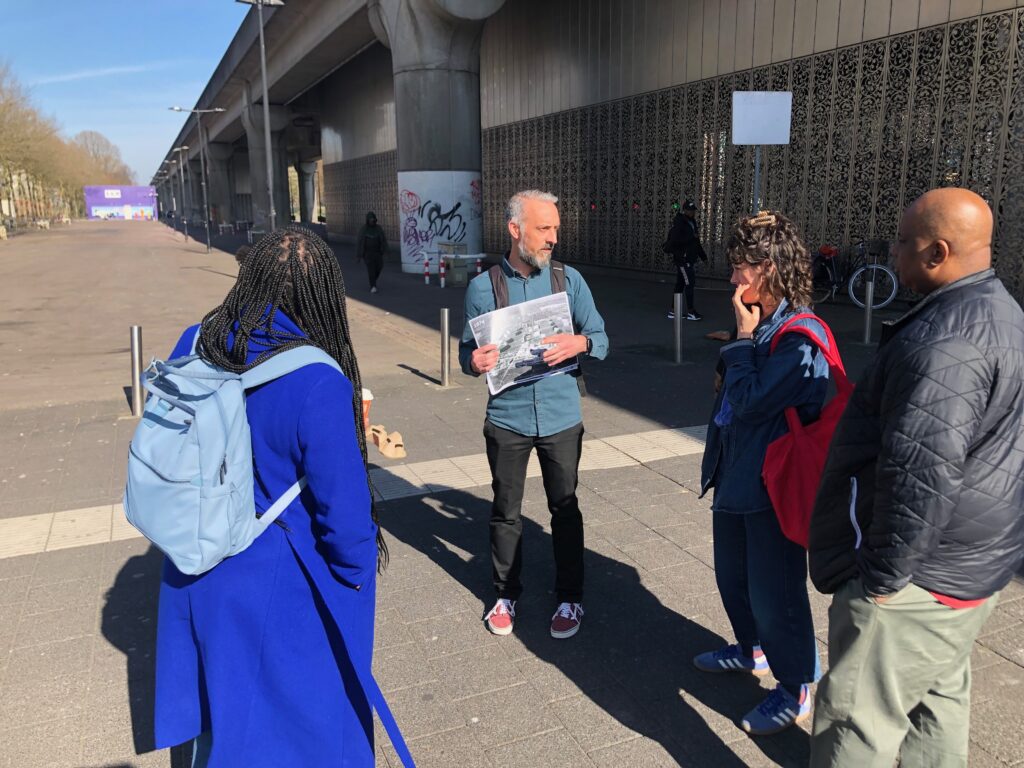
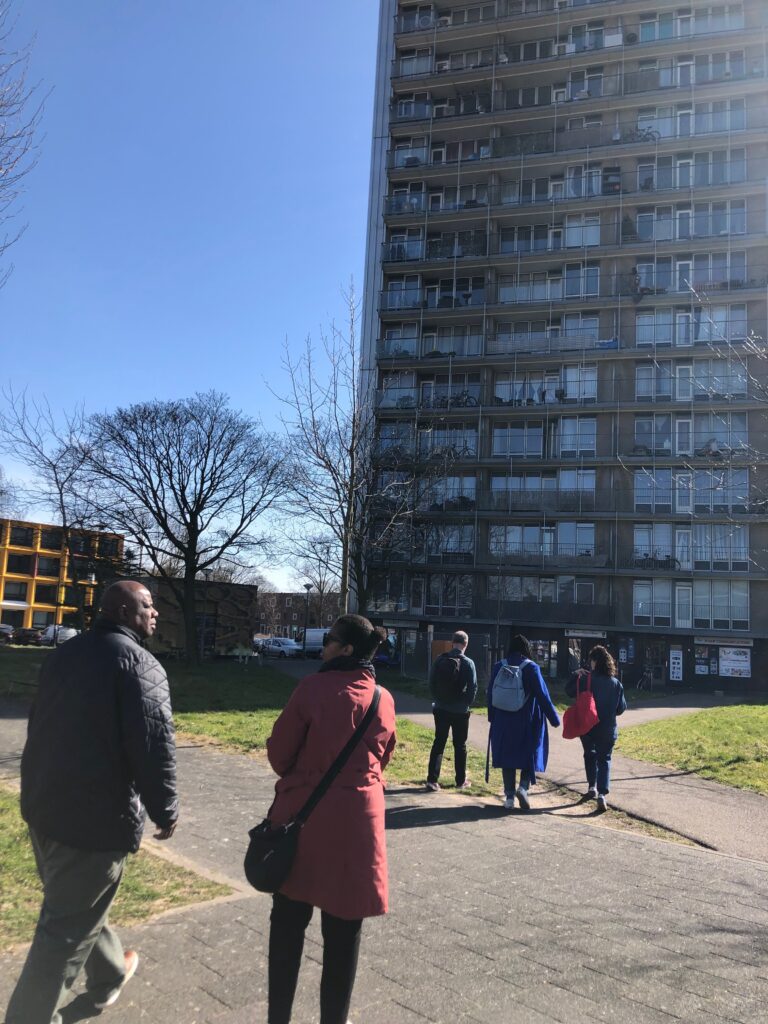
Gert-Jan Bakker, Senior Urban Designer for Amsterdam’s Zuidoost and Weesp team, met the Baltimore City Planners at the Kraaiennest metro station for a walking tour of the “K-Buurt” area of Zuidoost.
Rachel Sengers, chair of the Baltimore-Rotterdam Sister City Committee, and Krista Green, Arts, Culture & Heritage professional from Baltimore and part of the planning team for the ‘Walk On By’ Baltimore-Rotterdam artists exchange, also joined the group. Later in the day, Joy Davis, ‘Walk On By’ curator, also joined.
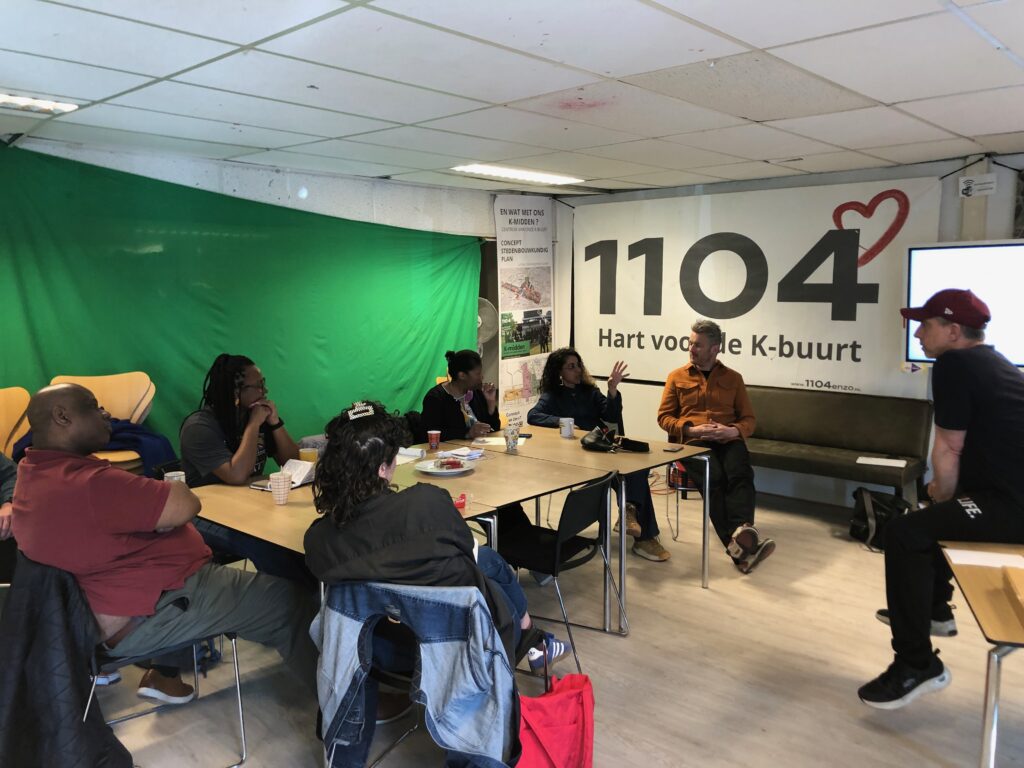
Group discussion with Mike Brandjes from Hart voor de K-buurt
(Photo: Sengers)
K-Buurt community organizer Mike Brandjes is from Hart voor de K-buurt, a community-run organization that is leading many initiatives in this area. Mike gave a presentation in one of the highrise tower blocks, followed by a group discussion that included Najah Aouaki, Urban Economist and coordinator of an exchange between several boroughs in the Netherlands and U.S.; Thijs van Spaandonk, member of Verdedig Noord community organization, urbanist, and Chief Government Advisor on the Built Environment; Gert-Jan Bakker; and the Baltimore delegates. Many topics were discussed related to urban development — e.g. social inequality, poverty, gentrification, and economic development; the dynamics between the city government and local residents — and a variety of methods community activists are using to help bring about positive changes.
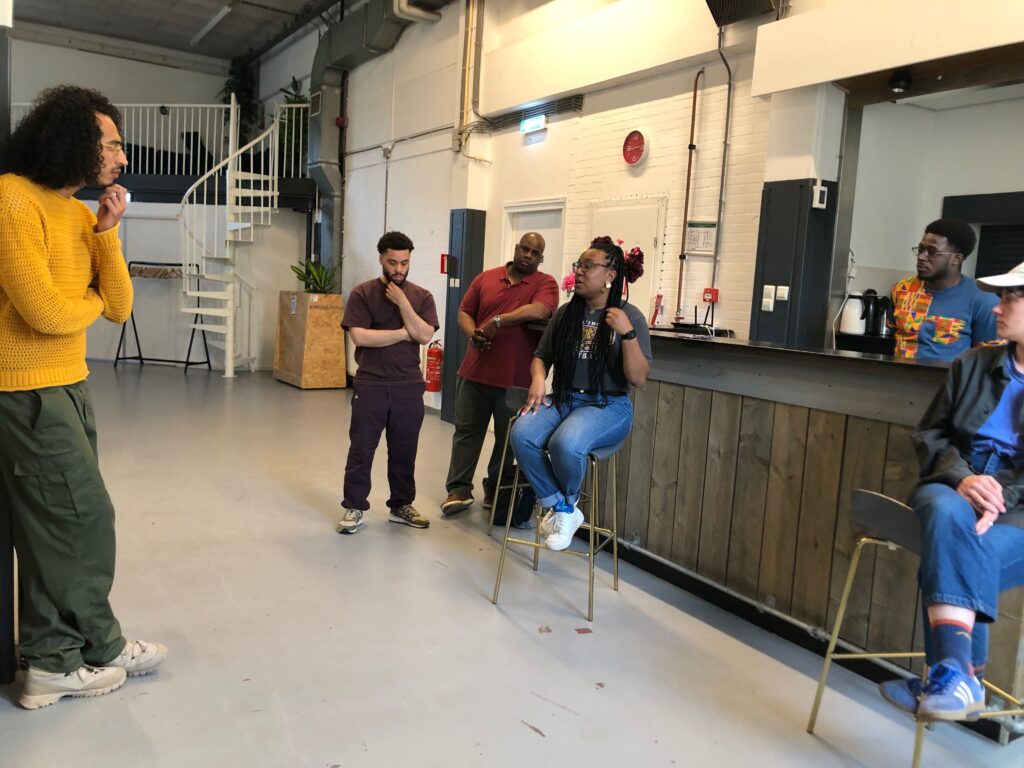
Group discussion at Kazerne Reigersbos
(Photo: Sengers)
The Baltimore group visited Kazerne Reigersbos is a cultural community center and incubator in the Reigersbos area of Amsterdam Zuidoost, with studios for creative entrepreneurs, artists and cultural organizations; with space for workshops, sports activities, music production, meetings, neighborhood activities, and more. It is located in located in a former fire station that was vacant before they moved in.
The city let artists community members use vacant unused buildings in Amsterdam in previous years during the financial crises, to use as a breeding ground for cultural initiatives — but now, with the city’s plans for demolishing old buildings and new development, there is a risk that creatives will be pushed out of their buildings, including Kazerne Reigersbos. The city does not fully understand and recognize the value that these kinds of spaces provide to the community. There was a lively discussion about this at Kazerne Reigersbos with Maru Asmellash, Fumi Koswal, and other leaders of Kazerne Reigersbos, Thijs van Spaandonk, and the Baltimore delegates. Joy Davis, ‘Walk On By’ curator, joined the delegation at this point.
March 21: Amsterdam Noord
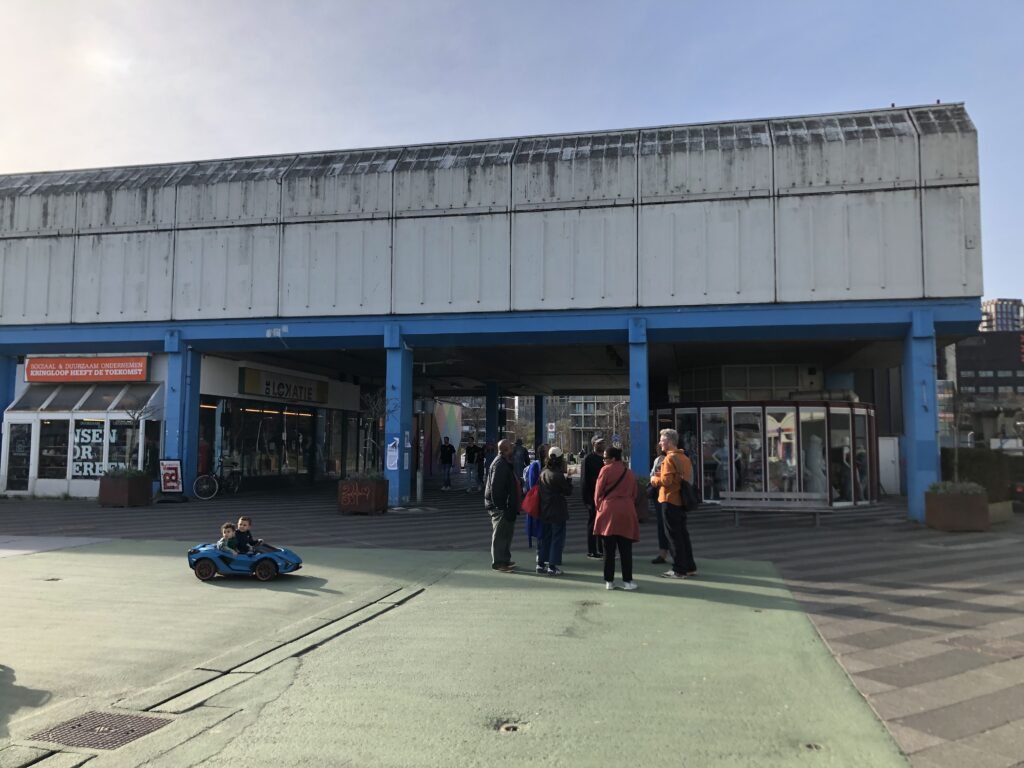
Tour of Amsterdam Noord with Thijs van Spaandonk
(Photo: Sengers)
In the late afternoon, Thijs van Spaandonk took the delegation on a tour of Amsterdam Noord (North), where there also are old previously-vacant buildings that currently are used by creatives and local entrepreneurs, at risk of being pushed out as redevelopment comes to the area. Derek Moore, a graduate student of city and regional planning at Morgan State University, joined the group at this point here; he was a participant in Professor Cristina Murphy’s student trip.
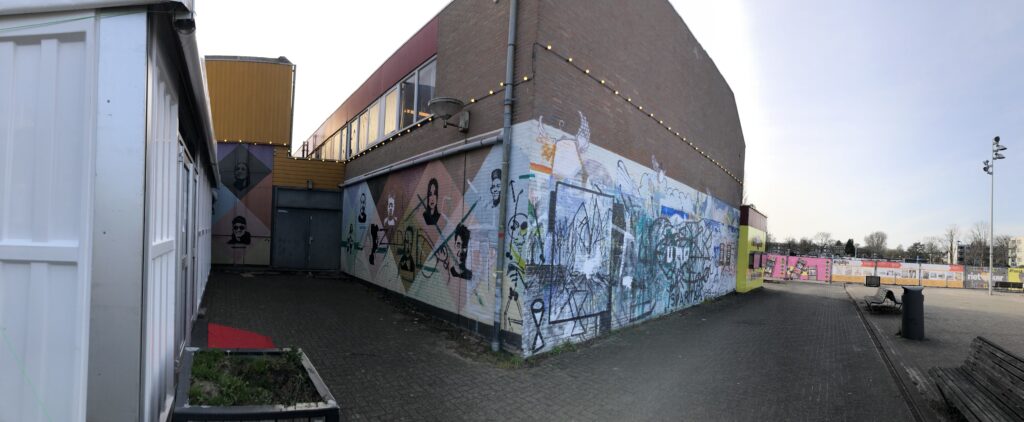
The last stop on the tour was an inspiring example of a community-led space: De Rietwijker in Amsterdam Noord, which includes office space, a makerspace with classes for youth, production studios, community kitchen, and more. It is located in a community center in the Banner Noord area that was originally under city control; the community has worked hard to gained control over it.
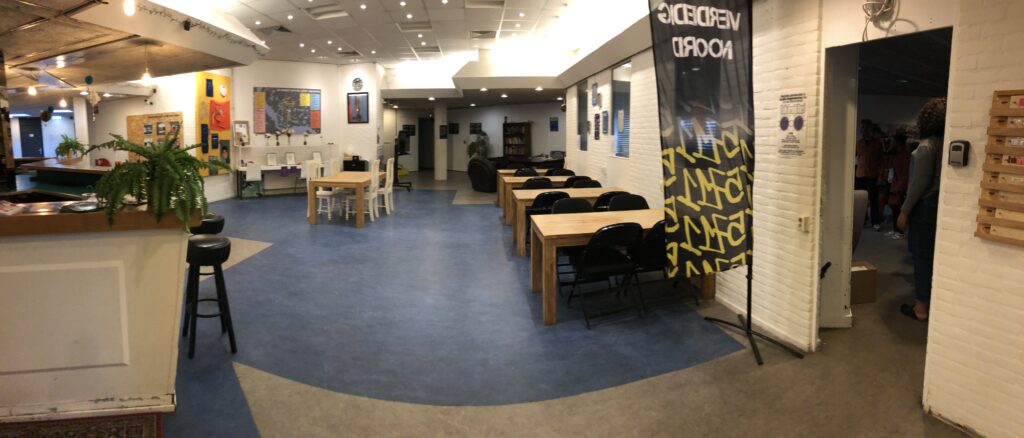
The space include offices of Verdedig Noord (Defend Amsterdam Noord), an organization of community residents that that uses art and activism to fight for solidarity and against gentrification in Amsterdam.
The Baltimore delegation met with Terra Dakota Stein, Joy-Anne Sibelo, and Jeroen Pieterse who are part of the leadership of De Rietwijker; they are also members of Verdedig Noord.
Thank you
Special thanks to Thijs van Spaandonk for helping ideate and coordinate many of the activities for the Baltimore Department of Planning, and to Morgan State University Professor Cristina Murphy who curated an impactful week-long program for her students that the Baltimore Department of Planning could attend.
Next Steps
Several of the people that the Baltimore students and city planners met in March on Rotterdam and Amsterdam came to Baltimore in April 2025 for a reciprocal visit on the theme of community-led urban design. About this exchange
