Annual Report & Plan
Baltimore Sister Cities Annual Accomplishments Report for 2025 (PDF, 4.3mb)
Baltimore Sister Cities Annual Plan for 2026 (PDF, 1.8mb)




Baltimore Sister Cities Annual Accomplishments Report for 2025 (PDF, 4.3mb)
Baltimore Sister Cities Annual Plan for 2026 (PDF, 1.8mb)
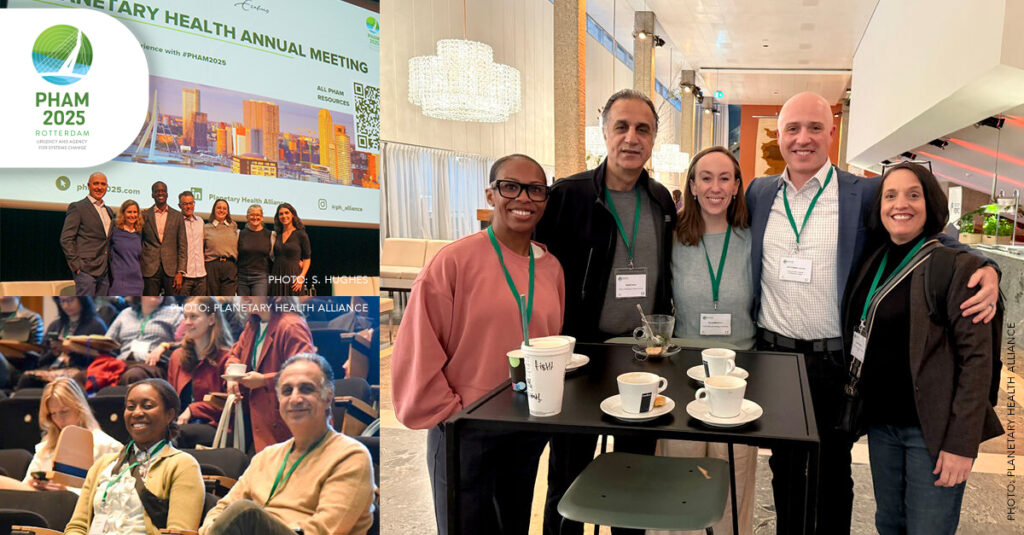
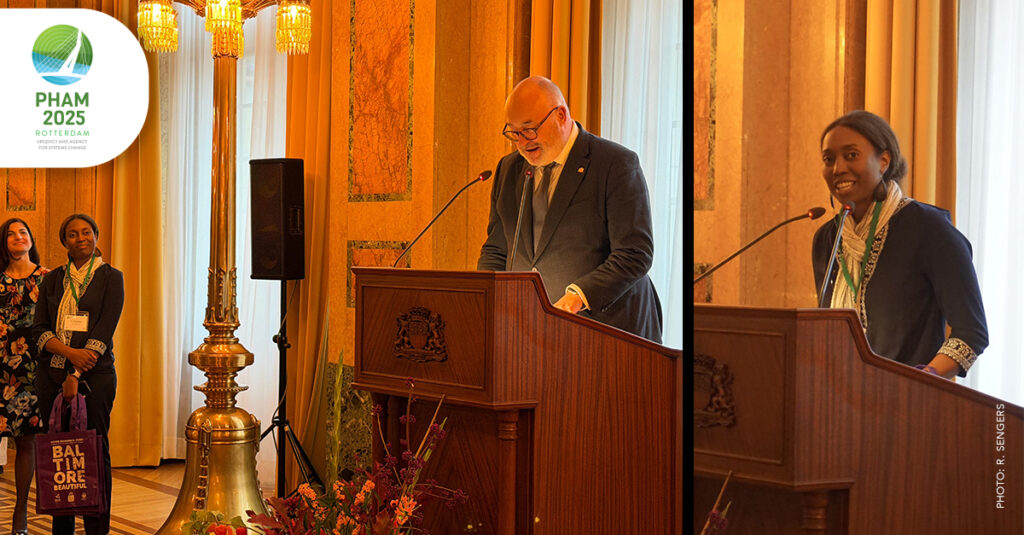
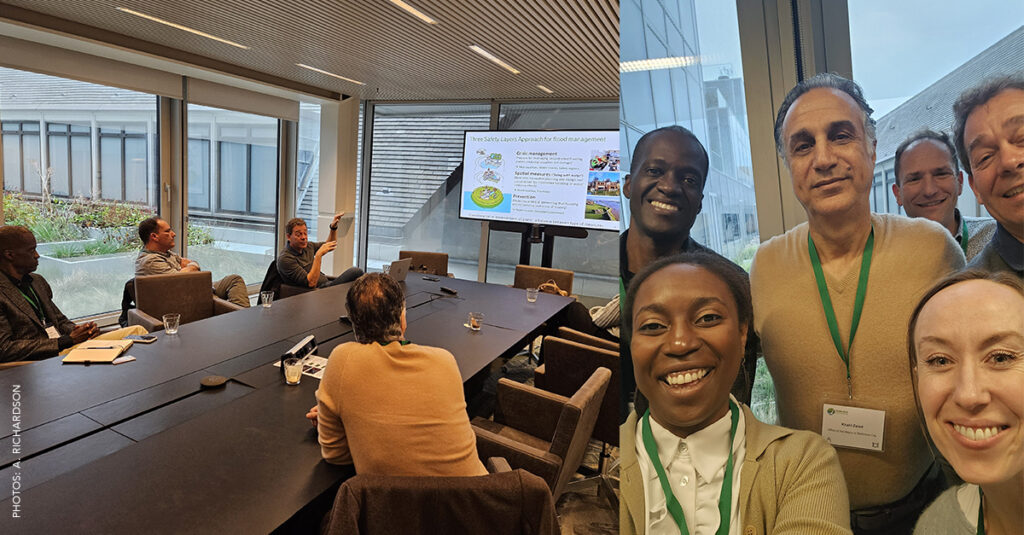
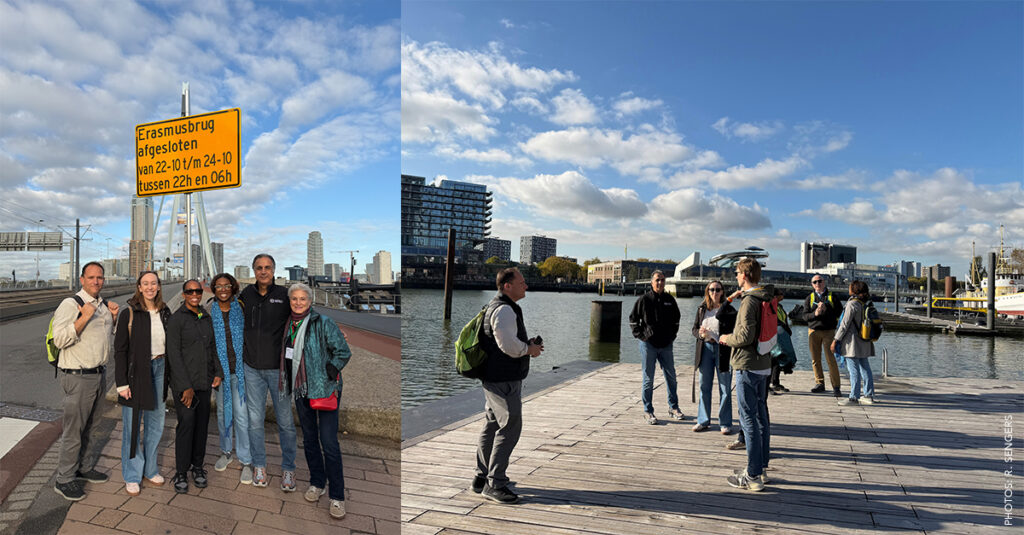
Faculty and staff from Johns Hopkins Institute for Planetary Health (JHIPH) and a Baltimore City delegation traveled to Rotterdam in October 2025 for a research trip, to attend the international Planetary Health Alliance’s Annual Meeting (PHAM) and to participate in a custom program of meetings and site visits in Rotterdam and Delft on themes of multi-functional nature-based solutions, water storage, flood resilience, public health, and more — to bring back ideas and inspiration for a healthier and more resilient future in Baltimore.
The delegation included Dr. Letitia Dzirasa, Baltimore’s Deputy Mayor of Health and Human Services; Khalil Zaied; Baltimore’s Deputy Mayor of Operations; Ava Richardson, Director of the Office of Sustainability at Baltimore City Department of Planning; Brad Rogers and Samantha Rose from South Baltimore Gateway Partnership; Seydina Fall from Carey School of Business at Johns Hopkins University. Baltimore-Rotterdam Sister City Committee assisted JHIPH with the planning and execution of this research trip.
Held every 18 months, PHAM provides a forum for civic leaders, policymakers, scientists, and other professionals to seek solutions for the connected challenges of human health and the planet’s natural systems. Rotterdam, the site of the 2025 edition of PHAM and Europe’s largest seaport, has implemented multiple climate-resilient solutions to help ensure continued economic success and human health into the future. In addition to attending the PHAM conference, the delegation met with Rotterdam’s government officials and toured innovative climate and resilience-focused projects throughout the city. Baltimore‘s participation in PHAM was not just an opportunity for knowledge exchange, but also for new and continued partnerships to invest in the city’s health and prosperity.
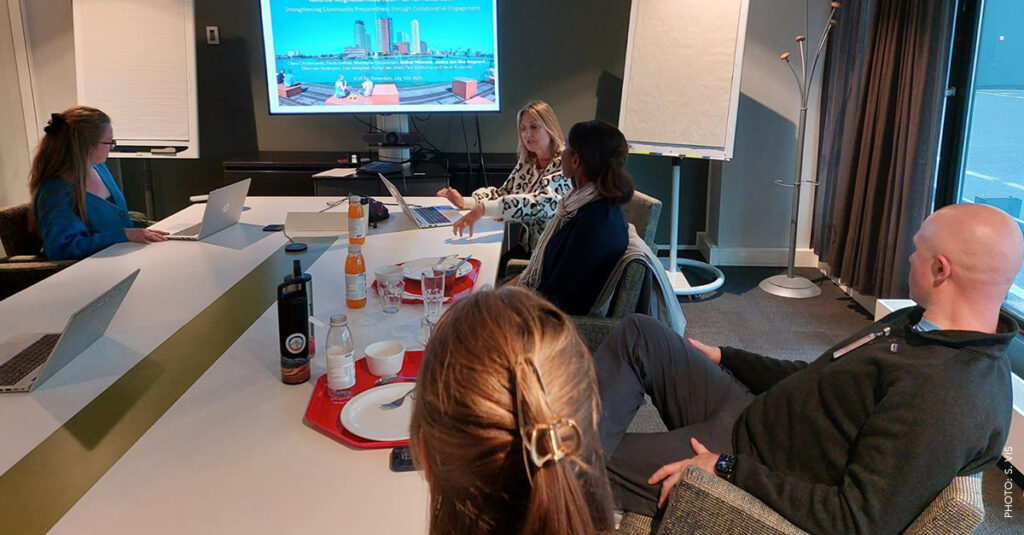
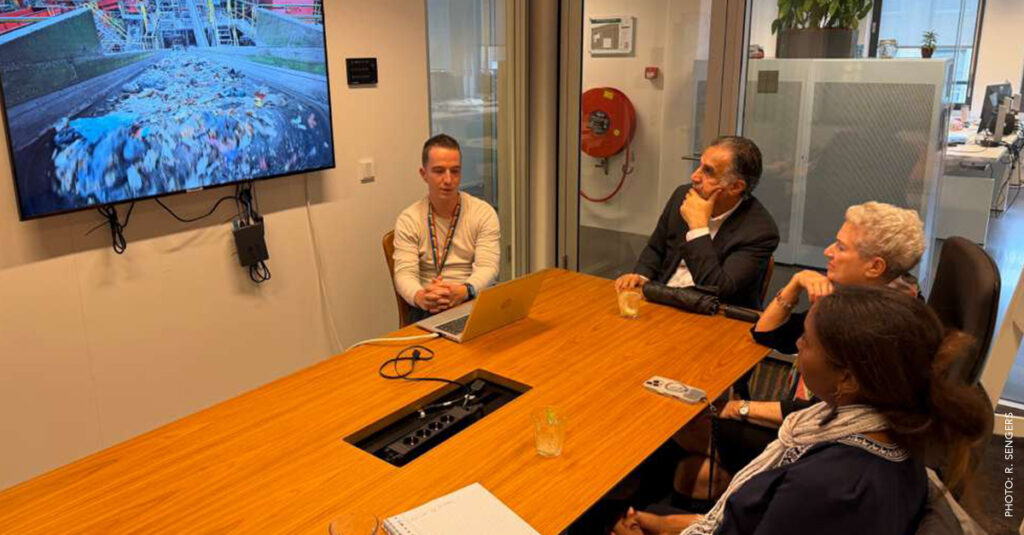
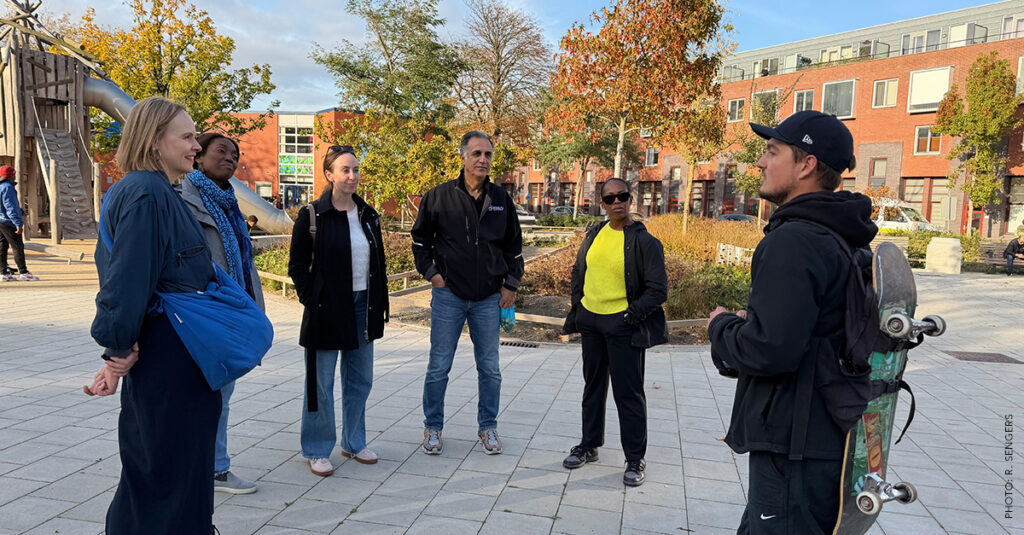
Meetings with the public health department included a discussion with Josine van den Boogaard and her team (left photo) about Rotterdam’s public health strategy for heat stress with Ava Richardson from Baltimore Office of Sustainability and Chris Lemon from Johns Hopkins Institute for Planetary Health, and a city walking tour and meeting for Baltimore Deputy Mayor Dr. Letitia Dzirasa with Willemijn Lamoré, Director of Public Health for the Rotterdam-Rijnmond region. The Baltimore delegation also met with Daan van den Elzen (right photo) from Rotterdam city government’s waste management division, for a discussion about trash management and recycling.
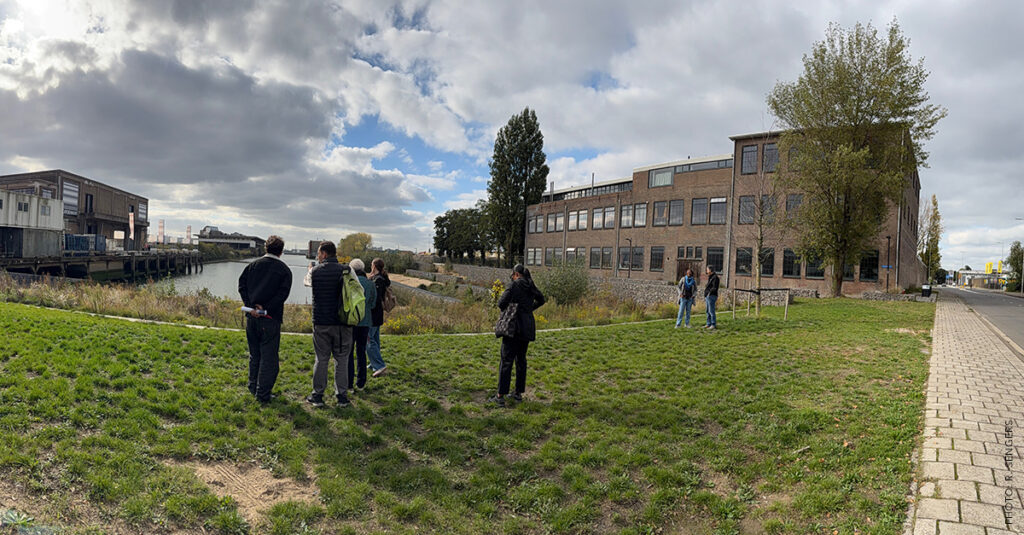
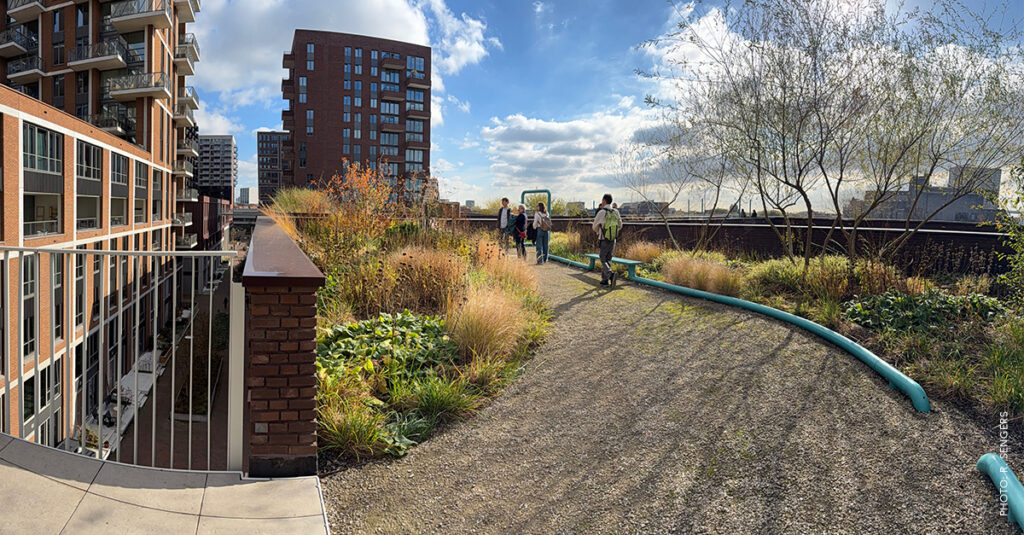
Left: Multi-functional green roofs and stormwater buffer at a set of interconnected buildings (Dakpark de Groene Kaap), part of the tour with Tim De Waele. Right: Climate-resilient Driehoeksplein in BoTu neighborhood (Rotterdam, October 2025); meeting with Barbara Luns (AIR Rotterdam) and Mike van Staten (urbanist) who have previously traveled to Baltimore in April 2025 as part of an urban design delegation.
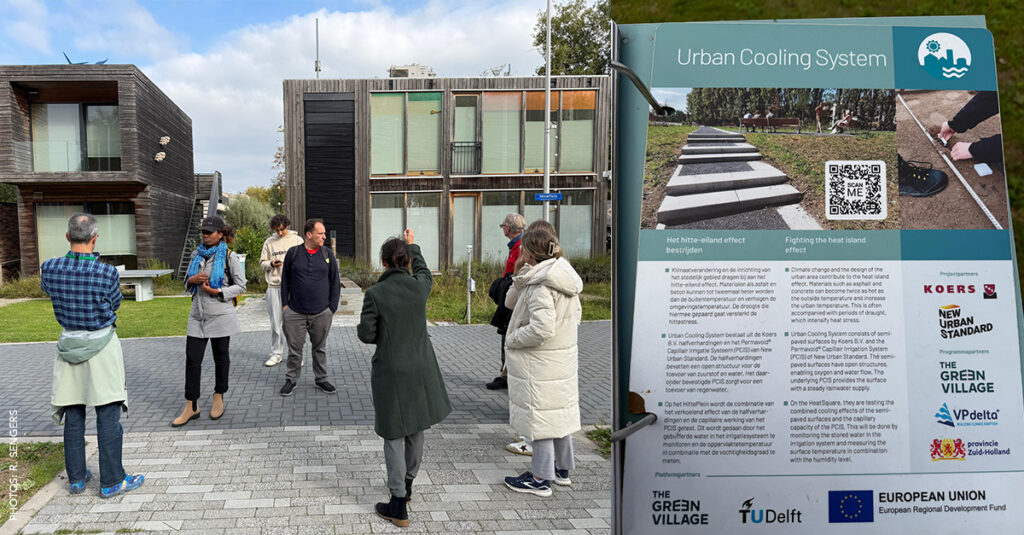
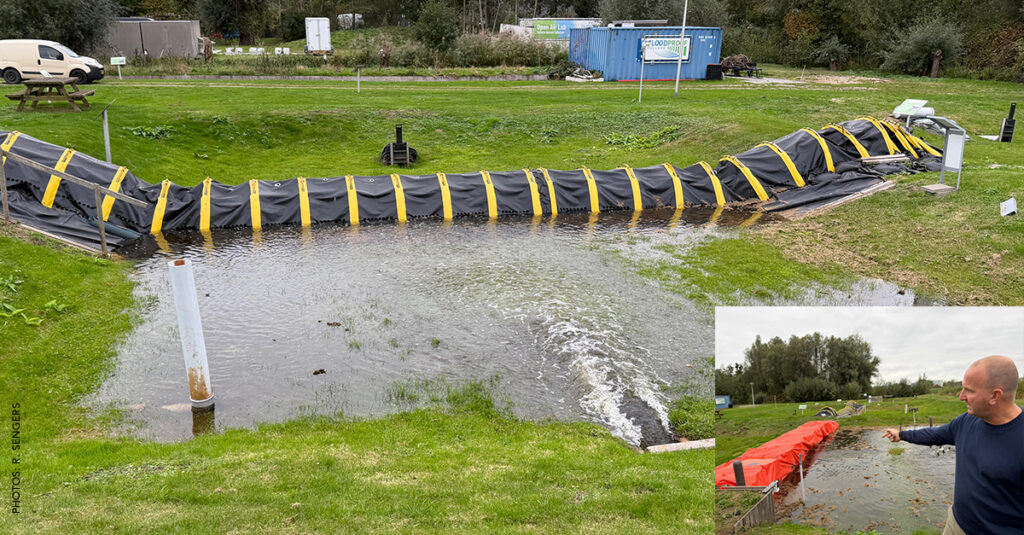
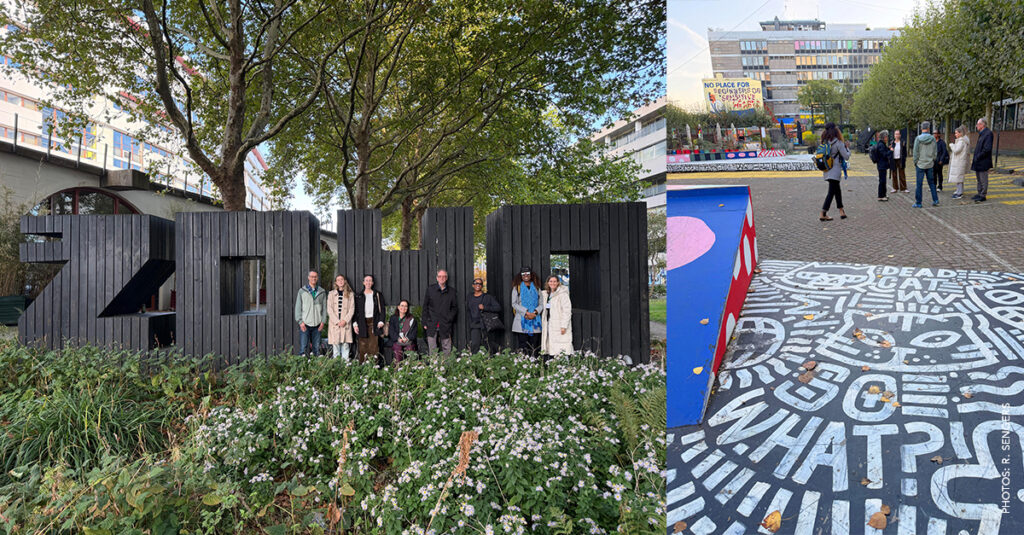
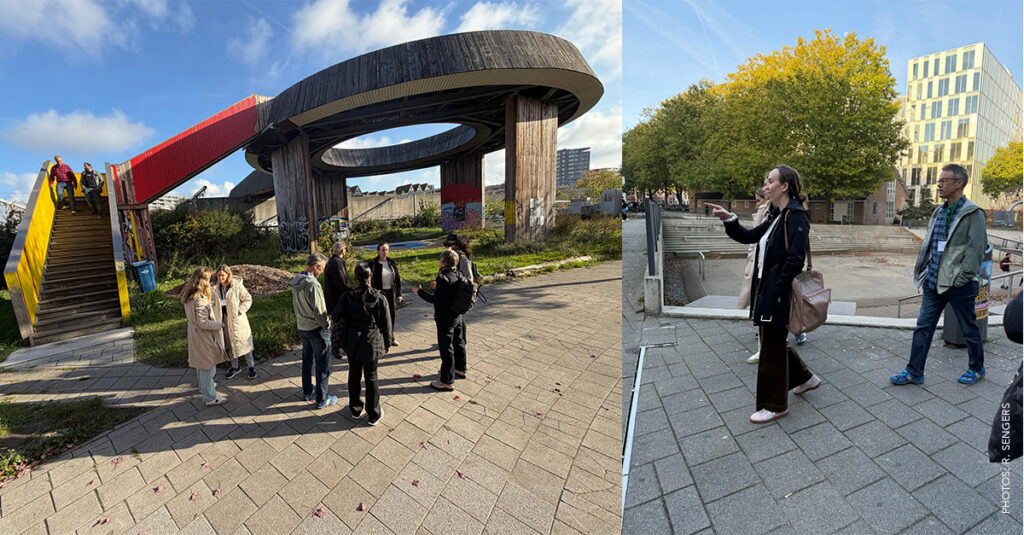

A big thank you to the people who helped out before or during the workweek, including our Baltimore Sister Cities volunteers; Johns Hopkins Institute for Planetary Health (Chris Marshall, Christopher Lemon, Barbara Paley, Ben Zaitchik, Susan Koch Hughes, Hannah Atonucci, Erin Broas, and many others); Saskia Pardaans from the Netherlands Embassy who worked on the program for the site visits; Rotterdam city government (Unal Sezisli, Tim de Waele, Willemijn Lamoré, Simone Vis, Corjan Gebraad, Daan van den Elzen, Johan Verlinde); Barbara Luns (AIR Rotterdam); Mike van Staten (urbanist); Ferdjan van der Pijl (architect); UrbanGuides Rotterdam; De Urbanisten; Green Village and Flood Proof Holland (Lindsey Schwidder, Jean-Paul de Garde, Raymond Hofer); Dagan Cohen from Amsterdam Donut Coalition who invited Seydina Fall to a talk about doughnut economics; coordinators from Erasmus University Rotterdam (local host for PHAM); and many more people.

Exchange Part 1: In March 2025, students and faculty from Morgan State University School of Architecture + Planning (SA+P), representatives from Baltimore Department of Planning, and design professionals travel to Baltimore’s sister city of Rotterdam in the Netherlands. The trip includes visits to innovative design firms and to urban planning schools, workshops, tours of the built environment, lectures, sidetrips to Antwerp, Delft and Amsterdam, and more. Community-centered participatory design, placekeeping, and social sustainability are the key themes for this year’s trip. Professor Cristina Murphy (SA+P) is the lead organizer/curator for this annual trip. Baltimore City Department of Planning (DOP) staff with experience in community-centered development (planners from the Community Planning and Revitalization division) are joining the students on this trip, providing their perspectives and experience.
Exchange Part 2: In early April 2025, community organizers, city planners, and urban designers from Rotterdam and Amsterdam reciprocate the exchange by coming to Baltimore for a workweek. Goals for this research trip: learning how community-led visioning and urban development happens in Baltimore, and alternatives to real-estate-developer-driven development; sharing examples of community-led initiatives in Baltimore, Amsterdam and Rotterdam; how city government can support community-led development; placemaking and placekeeping; how to engage and empower youth in shaping the future of their neighborhood.
The April workweek includes a public lecture on April 10 at MICA hosted by AIA Baltimore (speakers: Thijs van Spaandonk and Zico Lopes), and a virtual lecture on April 8 hosted by Morgan SA+P (speaker: Dr. Roberto Rocco from TU Delft’s Spatial Planning department and the Centre for the Just City).
This exchange is part of a growing ongoing collaboration that started as a joint studio by Morgan State University School of Planning + Architecture and the Rotterdam Academy of Architecture and Urban Design in 2019 around the theme of the Just City.
Joe and Margaret Cellucci
Susannah Bergmann and Dave Huber
Chesapeake Tile & Marble
The April program is supported as part of the Dutch Culture USA program by the Consulate General of the Netherlands in New York.
The Baltimore-Rotterdam Sister City Committee (part of Baltimore Sister Cities) leads the fundraising campaign for the exchange. Baltimore Sister Cities is a 501(c)(3) nonprofit; donations are tax-deductible to the full extent of the law.
Baltimore Sister Cities Annual Accomplishments Report for 2024 (PDF, 1.9mb)
Baltimore Sister Cities Annual Plan for 2025 (PDF, 2.1mb)
Date/time: Sunday, August 10, 2025 at 1-3 pm
Location: SNF Parkway Theater, 5 W. North Ave., Baltimore, MD
Admission: Free; advance registration required
More info & to register: www.bkscc.org/news-events/80-years-later
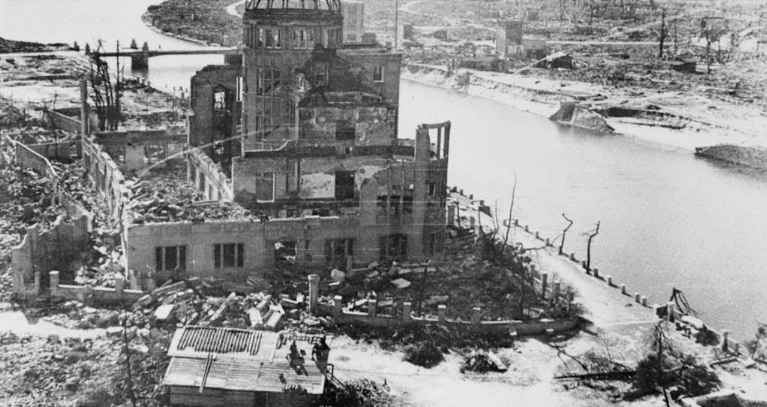
80 years ago, on August 6th and August 9th, 1945, the US government dropped the first and only nuclear weapons ever used in warfare on Hiroshima and Nagasaki. This teach-in will remember these events through a series of short films featuring:
With the help of knowledgeable panelists, we will consider whether these weapons can be eliminated, and learn what role we the people, the media and elected officials can play. Panelists include:
This event is free but pre-registration is required. Register via this link: https://www.mobilize.us/backfromthebrink/event/814062/
Sponsors: Chesapeake Physicians for Social Responsibility, Prevent Nuclear War Maryland, Towson University Asian Arts and Culture Center, Baltimore-Kawasaki Sister City Committee (BKSCC), Pax Christi Baltimore, Baltimore Chapter of World Beyond War, Maryland Peace Action, and WG on War and Militarism, Baltimore Yearly Meeting, Quakers.

Date/time: Saturday July 27, 2024 at 1pm ET
Location: Towson University Center for the Arts Building, Room CA 2032
Admission: Free
More info: Event webpage
The Asian Arts and Culture Center together with Towson University College of Fine Arts and Communication and Baltimore-Kawasaki Sister City Committee are proud to present a must-see documentary about nuclear weapons, nuclear testing, and evidence of contamination fallout that eclipses the movie Oppenheimer and shines a light on 1950’s nuclear history. This screening includes a visit from the . A panel discussion follows the film with: Hideaki Ito, the film’s director; Gwen DuBois, President of Chesapeake Physicians of Social Responsibility; Peter Kuznick, Professor at American University and Director of Nuclear Studies Institute; Max Obuszewski, Baltimore Nonviolent Center
Presented by Towson University Asian Arts & Culture Center and Baltimore-Kawasaki Sister City Committee.
A travelogue by Professor Cristina Murphy, the curator and coordinator of the trip.
A shorter version of this article is available on Morgan State University’s website.
Morgan State University, School of Architecture and Planning (MSU SA+P) students spent 10 days in the Netherlands during March 15–24, 2024. They were joined by Director of the Baltimore City Department of Planning and two of its urban planners, and several Baltimore-Rotterdam Sister City Committee members. This marked another successful trip characterized by a mix of personal, cultural, architectural, and urban experiences.

Figure 1. The Baltimore group has just landed in the Netherlands and meets with RAvB in Rotterdam at the academy’s building. Introductions and fun facts are shared among the participants.
What has set this trip apart from prior trips to Rotterdam with the Morgan SA+P students is the fact that this year the trip occurred within a class for credits. Students participating in the trip had to submit a letter of intention to be admitted to the class. Once in, they had to support the March trip by arranging flight tickets, sorting among various accommodation solutions, and networking to support the fundraising campaign. A fundamental component of the trip to Rotterdam is our ongoing relationship with the Rotterdamse Academie van Bouwkunst (a.k.a. RAvB; Rotterdam Academy of Architecture and Urban Design), a collaboration that started in 2019.
This year, SA+P students had the privilege to engage with RavB Studio10: Hef in eigen handen (I Hef a dream), an ongoing project consisting of creating a vision together with the youth of Feijenoord and, specifically, with the HefHouse community.

Figure 2. Students kept journals of the trip and some of their material fed into the final exhibition in May at the end of the semester.
Set up as a support to the RavB Studio10, Morgan SA+P’s ARCH 738 course is an elective that combines community-based urban development and zero-carbon, circular and resilient architecture.
The SA+P collaboration with RAvB aims to learn from each other. What can Rotterdam-based practices learn from Baltimore practices and vice versa? The program in Rotterdam (and its surroundings) focused on three different components that intended to maximize the exchange of knowledge through:
1. A multi-day workshop with the specific intention of observing the HefHouse community and design through a role-play exercise intended to speed up the knowledge of a place so different and unfamiliar to the students.

Figure 3. Students working at the HefHouse.
2. Several site visits to exhibitions and case studies in Rotterdam, Amsterdam, Brussels, and Antwerp. These trips directly addressed topics studied during the workshop such as disinvestment, gentrification, participatory design, community empowerment, resource preservation, and circular economy.

Figure 4. Students, faculty, professionals, Baltimore City delegates, and Baltimore Rotterdam Sister City Committee members visiting the Colonialism en Rotterdam exhibition at the Wereldmuseum Rotterdam.
3. On different afternoons, we visited inspiring architecture offices and institutions that are actively working on community-based circular and resilient urban developments.

Figure 5. Keilepand, headquarter to so many creative minds among which are GroupA and CarbonLab, the main stakeholders of this place.
The approach focused on design solutions for a community-based circular and resilient urban development, aimed at generating common visions for the disinvested area and its young community. The students and the communities worked on generating better spaces for the people living there, aspiring at people retention through the design of better public spaces, more jobs, stronger educational programs, people empowerment, and the formation of a common voice advocating for more equitable living conditions. Our attention covered all people within these communities. Our passion addressed the weak ends of the Rotterdamse society that lacks a presence in the higher decision-making administration thus incapable of positioning itself in the grander social and urban scheme of this growing global city.

Figure 6. At the HefHouse, the final presentation was a dynamic dialogue between students, academics, professionals, and the community.
In general, the Netherlands is characterized by a social approach to city planning. Yet, the city is frantically growing and gentrifying and does not seem to provide the necessary tools for certain people to navigate its people-centric bureaucracy. If knowledge is not equally distributed among all citizens, some are unequivocally excluded from the benefits.
When it comes to planning cities and program services within the communities (and especially disinvested ones), the Dutch method is often top-down: people’s wellness and basic needs are provided by the State. Decision-makers establish what a community needs to function and overlap generic expectations on its citizens who, in term, can deliver little to no feedback.
Top-down urban development approaches involve centralized planning and decision-making by government agencies and that can be efficient because it expedites projects. Centralized planning allows for coordinated efforts and quicker implementation of large-scale infrastructure projects or urban regeneration initiatives. It also enables authorities to take a holistic view of urban development, considering long-term goals, regional priorities, and broader social, economic, and environmental factors resulting in more comprehensive and integrated urban plans that address multiple dimensions of sustainability and resilience. The advantage of this approach to community development is that services can be provided relatively fast without the community going through the burden of looking for financial means.
This approach also allows for the efficient allocation of resources, including funding, land, and infrastructure, to address pressing urban challenges and meet the needs of diverse populations.
Yet, it’s important to recognize that they also have limitations, including a potential lack of community engagement, reduced flexibility, and the risk of excluding diverse perspectives.

Figure 7. Nato, the community leader, providing feedback on one of the student works at the HefHouse.
On the other hand, and especially for disinvested communities, the United States heavily leverages participatory design, a method of designing for communities, within, and for communities. Participatory design and grassroots processes could be particularly successful when working in segregated neighborhoods because these processes empower residents to actively participate in shaping their environment, giving them a voice in decisions that affect their lives.
Residents of segregated neighborhoods possess invaluable local knowledge about their community’s needs, challenges, and strengths. By involving them in the planning process, planners can tap into this knowledge to develop more contextually appropriate and effective solutions.

Figure 8. After the presentation of the student work, and after sunset (we were meeting during Ramadan observation), the community offered us a delicious Turkish-Moroccan meal.
Historically, marginalized communities may be skeptical of top-down planning approaches and external interventions. Participatory design and grassroots processes help build trust between planners and residents by demonstrating a commitment to collaboration and genuine engagement.
Segregated neighborhoods often have unique cultural identities and social dynamics that should be respected and reflected in planning initiatives. Participatory approaches allow for the co-creation of solutions that are culturally sensitive and responsive to the needs of the community.
Segregated neighborhoods often face systemic inequities in access to resources and opportunities. Participatory approaches enable residents to advocate for solutions that address these inequities and promote social justice.
Projects developed through participatory design and grassroots processes are more likely to be sustainable in the long term because they are driven by the community’s priorities and aspirations. Residents feel a sense of ownership over the outcomes, increasing the likelihood of successful implementation and maintenance.

Figure 9. Different stages of the workshop presentation: after the stakeholders listened to students’ pitches and provided initial feedback through sticky notes, the students had time to assimilate and incorporate the comments and edit their verbal presentation for a second round of the project’s pitches.
These approaches’ downside is that financial sustainability can be difficult to achieve and the implementation time for long-term success can be problematic.
Balancing top-down planning with bottom-up participation and stakeholder engagement can lead to more inclusive, responsive, and sustainable urban development outcomes.
The exchange between the two schools was, therefore, potentially interesting from a community design approach.
Working with RavB is part of an ongoing collaboration between Baltimore and Rotterdam toward a deep investigation of what we can learn from each other.
Next, to be involved in a “real people and place” project, heavily leaning on community-based urban development practices, the focus was on a combination of zero-carbon emission, and circular and resilient architecture. Northern Europe’s approach to the built environment revolves around the carbon emission approach, energy-neutral/positive buildings, maximization of alternative resources, circular economy, reuse, and disassembly techniques.

Figure 10. Students pitching their work at the HefHouse.
On March 17, our 4th day in Europe, we traveled to Belgium and visited the cities of Brussels and Antwerp.
In Brussels, the walk was part of the Great Transformation, a physical experience that takes the urban explorer on a journey along twelve Future Places in Noordwijk and the Canal Zone of the city.
Conceived on paper in the 1960s and realized in the 1970s, the area is currently undergoing a great transformation that is most visible by the North Station and its surrounding districts.
The built environment offers a glimpse of the future, coming from the past: planning concepts intended to revolve around the necessary shift from fossil fuels to renewable energy, sustainable food accessibility and mobility system, resource-centric circular economy, open and social living environment, and inclusive labor market. The materialization of the great transformation is, however, radically different! At all urban scales (from districts to neighborhoods, streets, and homes), revitalization is an intentional, systematic, institutionalized infrastructural densification prioritizing outdated systems, hyper-programmatic aspiration without resolving any specific social or spatial negotiations, societal separation, spatial exclusivity, packed and ineffective co-housing solutions.

Figure 11. Students, faculty, professionals, and Brussels-based Hedwig van der Linden walk in Noordwijk and the Canal Zone.
From Station North, we made the 30-minute walk to Zinneke, a social and artistic project (Zinneke Parade) bridging the diverse communities of urban Brussels. Every two years, the parade brings together various stakeholders and 60 to 100 residents who, through a participatory creation process lasting more than a year, develop a shared artistic project that fits in with the theme of the Parade.
Throughout this creative process, Zinneke provides space for meetings, collaboration, and creativity, promoting social dynamics between residents, associations, schools, and artists from different neighborhoods in Brussels and surrounding areas.
Within this creative space, new ways of initiating collective actions of solidarity are constantly being worked on: the work of each participant is to highlight the unique cosmopolitan and pluralistic cultural wealth of Brussels.

Figure 12. Visiting Zinneke Association and appreciating their office renovation (two rowhomes merged into one great space).
We left Brussels North at 1 pm and reached Antwerp Central at 2 pm where we met with Jiska Gysels and Caroline Thaler from Endeavour, an architecture office focused on engaging with the final user in imagining and co-creating the environment.

Figure 13. Students and faculty gathering in the courtyard of a community library in Antwerp. The concept for how the space should be organized was conceived by Endeavour and the community.
Jiska and Caroline took us to the northern part of the city where there is less investment in public infrastructure and where the younger generation of immigrants is affected by systematic disinvestment and disservice and the area is perceived as unsafe.
Yet, just like it is happening globally, cities are becoming more attractive, and notoriously segregated neighborhoods are being revitalized. Redevelopment that is spun off from outside investments and that disregards community assets tends to physically and mentally segregate and displace minority groups. Open public spaces, once strongly underserved and neglected yet serving as a social and emotional aid to certain communities, are transformed into assets addressing and attracting richer gentrifiers. On the other hand, these same “open and public” urban realms become boundaries to poorer communities. Although they used to assemble there, these places are now designed to push them away. Hostile design is a reality and it occurs when places are intentionally designed to attract certain residents and, purposefully, make it unsustainable for other, less desirable groups, to hang out in.

Figure 14. Endeavour illustrates the concept of segregation and gentrification along one of the parks we visited in Antwerp.
Unconsidered redevelopment segregates and creates boundaries. What was once an underserved public park becomes a community asset to some and a violent territorial barrier to others.
Between March 18th and March 21st, students and professional guests visited the Municipality of Rotterdam and three architecture offices.
On Day 5, we visited Powerhouse Company situated on a floating building on the River Maas that was nominated best energy-performing building in the Netherlands for several years in a row.

Figure 15. Students, faculty, and professionals visiting Powerhouse Company.
On Day 6, the students and the Baltimore City delegates (the Director of Baltimore City Department of Planning and two of its urban planners) exchanged knowledge related to community engagement, urban growth, mobility, and future city visions. All were relevant points, although conversations on the future of housing typology, urban infrastructure engaging slower, safer, sustainable mobility, participatory and community design, and the challenge of climate change were the most relevant topics.
Cities’ economic, spatial, and social history are key and, after decades of testing sprawl and car-oriented solutions, the idea that smaller is more effective and that cities need to become denser is a fact.

Figure 16. Students, faculty, professionals, Baltimore City delegates, and Baltimore-Rotterdam Sister City Committee members at the Rotterdam Urban Planning department.
On Day 7 the group visited SuperUse Studios and the greater environment they occupy, namely the Blue City circular economy hub. SuperUse Studios is an office we know well.
I have been professing their philosophy and using their projects as Case Studies in my classes for years now. Reclamation and the value of material is their mission and they have introduced a new phase within the construction process named Dynamic definitive design, meaning that the construction team ought to allow the design to change in case the material is not found.

Figure 17. Students, faculty, professionals, and Baltimore City delegates visiting Blue City.
The office sits within the Blue City, former Tropicana, which used to be a wellness center with a large indoor/outdoor swimming pool. The space is occupied by a diversity of entrepreneurs who have the environment at heart. They are inventors using material that has been already used to conceive new creations through the Blue economy system, a holistic view of nature, mankind, and economy with the aim of no longer producing waste, but rather returning everything to the material cycle.
On Day 8 we visited GroupA and CarbonLAB in the Keilepand, an activity-based building deployed for sustainable urban developments. The building is a citadel that is capable of hosting exhibitions, lectures and debates, and young entrepreneurs starting businesses. It promotes and encourages meetings, knowledge exchange, and new collaborations and experiments.
CarbonLAB is GroupA’s Think Thank, a collective that investigates the possibility of designing and building with the environment and for a better quality of living.
It is time that designers lead clients to make fundamentally sustainable choices, from materials, design concepts, technologies, and regulations. GroupA, CarbonLAB focuses on developing and applying sustainable-driven solutions. The sustainability challenge is no longer a privileged choice but a global necessity that ought to be tackled in a transdisciplinary manner. Just like everything that matters, there is no one side to the same story and it is the collective and diverse voice that will, ultimately, reach important outcomes. CarbonLAB recognizes different perspectives and uses them to design better spaces for all people.

Figure 18. Students, faculty, professionals, Baltimore City delegates, and Baltimore-Rotterdam Sister City Committee members visiting GroupA/CarbonLAB.
Finally, on Day 9, the students presented their discoveries before a rich audience of local practitioners, academics, and the community. I see, I know, I wonder… community participation and development is about getting there, being in there, discovering the place, talking to its people, co-design, never being afraid of asking questions, and keep on exploring.

Figure 19. The biggest task embraced by the students was a public presentation of their findings at the HefHouse, Rotterdam.
This multi-day workshop was designed for observing and understanding the HefHouse community through role- play exercises. This multi-day brainstorming exercise was highly effective in accelerating students’ knowledge of a new and unfamiliar place.
The workshop took place at the HefHouse community hub and it provided students with background information about the community they were going to explore, including its history, demographics, cultural norms, and any relevant challenges or opportunities.
The workshop facilitated the creation of scenarios or situations that students encountered during the design work. These scenarios were realistic and relevant to the community being studied, allowing students to explore various aspects of daily life, interactions, and challenges within the community.
Key to the workshop was the conduction of guided walking tours of the community, allowing students to observe and interact with real-life situations while staying in character. During the tours, students were encouraged to take notes, ask questions, and document their observations.
Finally, students were encouraged to provide feedback on their experiences and the effectiveness of the role- play exercises.
By combining immersive role-play with field observations and reflective discussions, this workshop provided students with a deep and nuanced understanding of a new and unfamiliar place, fostering empathy, cultural competence, and critical thinking skills.
The way the students operate on the site is from within, through the lens of the community.
While wrapping up the week in Rotterdam, we are already brainstorming on additional events: along with continuing and reinforcing our March program in the Netherlands, there will be a reciprocal exchange in the fall of 2024 with a Dutch delegation coming to Baltimore to learn about community-centered, community-led urban design and development.

Figure 20. Some of the feedback was exchanged directly on the posters the students made.
I believe that Placekeeping is about recognizing spatial and social assets that are already embedded in the community — and the ability to retain them and transform them with and for who lives there.
Sustaining communities means starting with what the neighborhood (spatial) and people (social) have instead of what they do not; it is asking what are the assets present rather than what are the problems within.
A holistic approach toward sustainability is not only an option but a necessity. Sustainably in all its connotations needs to be part of students’ educations and a pragmatic application in the field is mandatory. We need to leap over the gap between theory and practice and our students ought to see the complex yet suitable relationship between research on the built environment.
This is how I intend to lead my teaching and this year’s trip has set the path for an education that is ready to respond to the challenge of our era.
The students created a post-trip exhibition about the experience, to showcase all the learning that happened.
A reciprocal exchange is being planned for fall 2024, with a Dutch delegation coming to Baltimore to learn about community-centered, community-led urban design and development. More about the 2024 Baltimore-Rotterdam exchange
Morgan State University School of Architecture + Planning: www.morgan.edu/sap
Rotterdamse Academie van Bouwkunst: www.ravb.nl
HefHouse program at Erasmus University: erasmusx.medium.com/hefhouse-discovering-a-new-community-in-alternative-classrooms-fd18141f098a
Brussels North walk: degroteverbouwing.eu/routes/en/building+blocks+for+future+places
Zinneke: www.zinneke.org/nl/contact
Powerhouse Company: www.powerhouse-company.com
SuperUse Studios: www.superuse-studios.com
Blue City: www.bluecity.nl/en
GroupA/CarbonLAB: groupa.nl
All photos in this travelogue were taken by CCM.
A special thanks goes to the Baltimore-Rotterdam Sister City Committee for believing in and actively supporting Morgan State University School of Architecture + Planning students to participate in this March 2024 study trip to Rotterdam and to Marcel Musch for involving the Rotterdamse Academie van Bouwkunst students.
Thanks for the support from the HefHouse (Frieda Franke, Business Developer at Erasmus University Rotterdam, Nato… and Nasra Djorai, District Manager Municipality of Urban Development).
And thanks to the sponsors who have generously provided funds to help cover the travel costs for the students.
Jeff and Laura Thul Penza



Althea Sherman, Corporate Attorney
Brenton Landscape Architecture
Susannah Bergmann and Dave Huber

1. Students and faculty from Morgan State University School of Architecture + Planning (SA+P) and representatives from Baltimore Department of Planning travel to Baltimore’s sister city of Rotterdam in the Netherlands in March 2024. Students will participate in design workshops in collaboration with Rotterdam Academy of Architecture & Urban Design (RAvB). The trip also includes visits to design firms and architecture schools, architecture tours, lectures, the city of Amsterdam, and more. Community-centered design and environmental sustainability are the focus for this exchange. Update: this March 2024 trip is now in the past — You can read the 2024 trip report to find out what happened during this trip.
2. In early April 2025, community organizers, city planners, and researchers from Amsterdam and Rotterdam reciprocate the exchange by coming to Baltimore for a workweek. Goals for this research trip: learning how community-led visioning and urban development happens in Baltimore, and alternatives to real-estate-developer-driven development; sharing examples of community-led initiatives in Amsterdam and Rotterdam; how city government can support community-led development; how to engage/empower youth in shaping the future of their neighborhood. Note: the planned trip date was moved from its original date of October 2024 to April 2025 – See the 2025 exchange page for more details.
Professor Cristina Murphy (SA+P) and Thijs van Spaandonk (Bright) are the lead organizers/curators for the 2024 exchange. The 2024 exchange continues an ongoing collaboration between SA+P Professor Cristina Murphy and RAvB since 2019.
We invite your firm to become a Sponsor to help cover travel and related costs for Morgan students, faculty, and chaperones for their trip to Rotterdam. There is also an opportunity for sponsors to join the March 2024 trip to experience the culture and innovative architecture in the Rotterdam region. The trip will be around March 15-22, 2024. Sponsors are welcome to stay longer than the delegation’s trip dates and visit even more cities, such as Utrecht, Delft, and cities in Belgium.
Experiential travel education is an impactful opportunity for students to gain global understanding and exchange ideas about architectural design, planning, resiliency, and sustainability. Students who attended past Baltimore-Rotterdam exchanges shared that it was “eye-opening” and that the buildings there “are very creative; they build in less linear fashion; it will influence my designs”. They appreciated the “exposure to different environments and design”; it “enhanced our mindset of what it means to be an architect” and made them “want to work internationally.” Morgan State is a leading HBCU (Historically Black College / University). The architecture and urban design profession suffers from a longstanding lack of diversity — your support will help enrich Morgan students’ education and thereby help bring more Black students into this profession.
The Baltimore-Rotterdam Sister City Committee is leading this fundraising campaign on behalf of the students and faculty.

* Silver, Gold, Platinum sponsors may send 1-2 representatives to take part in our customized tours and visits. You will be responsible for your own airfare, accommodations, and meals; we will be happy to point you to inexpensive options. This is a unique opportunity to partake in a low-cost architecture-focused overseas trip!
* Platinum Sponsors may also add any of the following custom benefits: Give a lecture at Morgan State SA+P; be included in tours for Dutch delegation visiting Baltimore; host architecture students for an office tour.
The Baltimore-Rotterdam Sister City Committee (part of Baltimore Sister Cities) is leading this fundraising campaign. Baltimore Sister Cities is a 501(c)(3) nonprofit; donations are tax-deductible to the full extent of the law.
Add your company’s name here! Contact to become a sponsor.
Jeff and Laura Thul Penza
Althea Sherman, Corporate Attorney
Brenton Landscape Architecture
Susannah Bergmann and Dave Huber
The faculty and students are creating charming Baltimore-themed “CityScape” ornaments, bags, and magnets to sell at market tables and other events this winter. Stop by their table at:

News Release – December 4, 2023
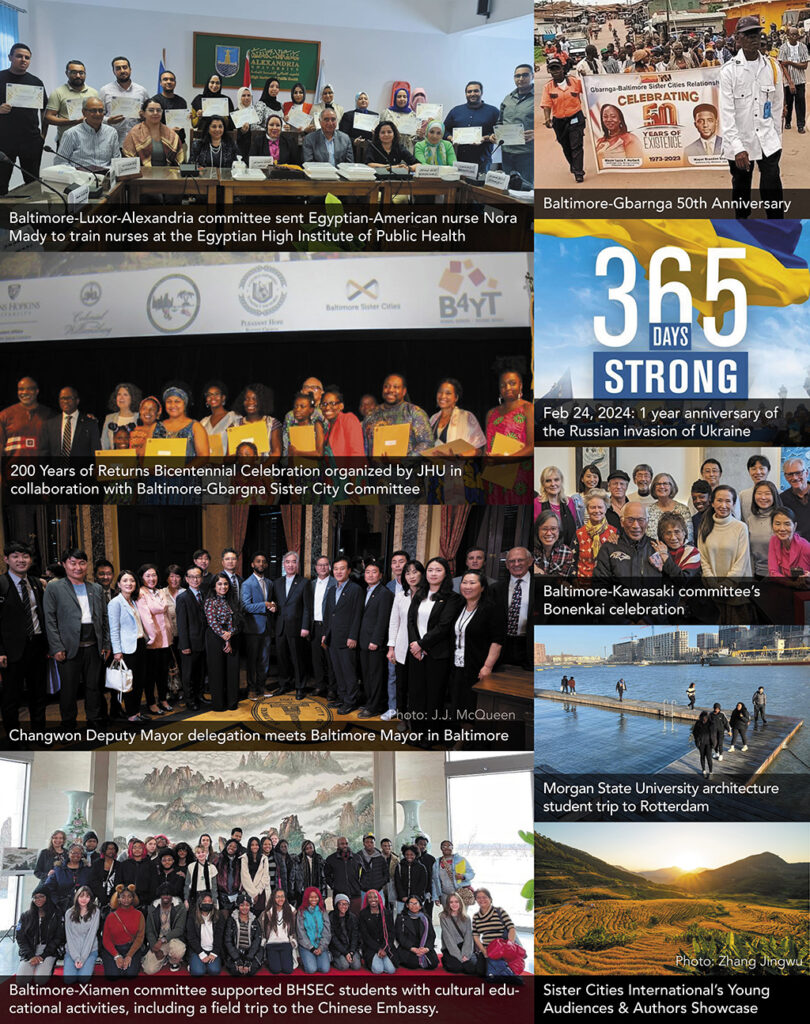
The Baltimore-Luxor-Alexandria (Egypt) Sister City Committee (BLASCC) and the Alexandria Sister City Committee collaborated to strengthen emergency/trauma nurse preparedness in Alexandria, Egypt.
The Baltimore-Luxor-Alexandria Sister City Committee ended 2023 on a high note. Through a collaboration between Baltimore and Alexandria Sister Cities, Egyptian-American Nurse Nora Mady, EMT-B, offered 4 days of training in emergency room trauma techniques to 16 nurses at the University of Alexandria High Institute of Public Health. This collaboration is the latest example of ways the Egyptian High Institute of Public Health – Alexandria University is inspiring large-scale, long-lasting solutions to improve and extend the lives of emergency/trauma victims.
“I am honored with the privilege of educating members of the nursing community in Alexandria, Egypt,”said Nora. “My goal is to empower these nurses with the knowledge and skills required to identify medical emergencies and implement nursing interventions to improve patient outcomes.”
This program was under the auspices of the Egyptian Ministry of Health and the High Institute of Public Health, Alexandria University. Engy Mohamed El-Ghitany, MBBCh, DTM&H, MPH, Dr.PH, is Professor of Tropical Health – High Institute of Public Health – Alexandria University (Egyptian Ministry of Health) and Vice-Dean for Community Service & Environmental Development.
Chairman of the Alexandria Sister City Committee, Dr. Ahmed H Warda, MD., said this project “shares the U.S. experience in the medical field from a theoretical and practical point of view.” After the training, Dr. Warda added, “Glad we did a successful event and everyone wants to repeat such beneficial projects and hope we can offer similar community services to our beloved Alexandria city.”
For more information, contact Tharwat Abouraya, BLASCC Chair, at


Baltimore Sister Cities Annual Accomplishments Report for 2023 (PDF, 1.9mb)
Baltimore Sister Cities Annual Plan for 2024 (PDF, 2.1mb)
 Baltimore sister city committees operate under the auspices of the City of Baltimore’s Office of the Mayor.
Brandon M. Scott, Mayor
Previous mayor’s Dec 2015 press release about Baltimore Sister Cities becoming a 501(c)(3).
Baltimore Sister Cities, Inc. is a 501c3 organization incorporated in the State of Maryland.
Member of Sister Cities International, Maryland Nonprofits, World Trade Center Institute, Visit Baltimore, & affiliate of Maryland International Education Consortium.
